

ANTIQUE — The provincial government of Antique is stepping up preparations for a possible prolonged El Niño, drawing lessons from the more than P287 million in losses recorded during the 2024 dry spell.
The intensified preparations are aimed at protecting farmers, fisherfolk, livestock raisers, and other communities from prolonged heat, water scarcity, and related risks expected to persist through the first half of 2027.
During the fourth-quarter meeting of the Provincial Disaster Risk Reduction and Management Council (PDRRMC) chaired by Gov. Paolo Javier on October 6, PDRRM Officer Broderick Train said the province suffered substantial losses during the 2024 El Niño, particularly in the agriculture and social sectors.
Agricultural damage alone was placed at P347.8 million. The province also recorded 43 bush, grass, and rubbish fire incidents that affected 176.02 hectares and caused about P40.98 million in damage across 10 municipalities.
Water scarcity was another major concern. During the first quarter of 2026, 11 municipalities and 216 barangays reported water shortages, prompting local disaster offices and the Bureau of Fire Protection to implement water rationing, tank deliveries, and deep-well pump deployment.
No active water shortage was reported from May 1 to October 5.
Train said these experiences underscore the need for early and coordinated action as DOST-PAGASA expects the current strong El Niño to intensify and possibly persist through the first half of 2027.
“The risks are proven to be real and the conditions are expected to grow in this period. So, we have to act now and prepare for the worst,” Train said.
Agriculture, fisheries on alert
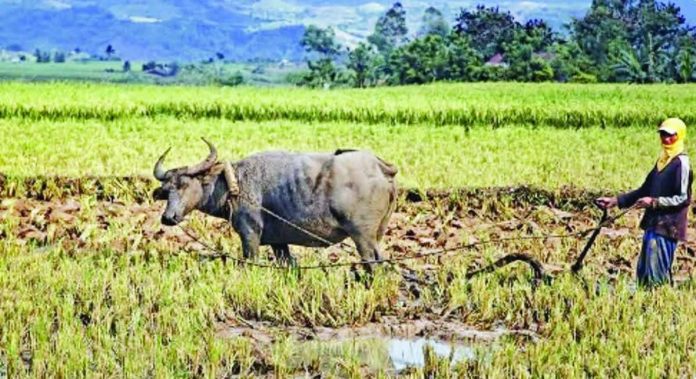
Agriculture remains among the sectors most vulnerable to prolonged dry conditions.
As of April 2026, about 43,363 hectares of rice, 1,337 hectares of rain-fed corn, and more than 52,000 hectares of high-value crops were identified as at risk of water stress and possible yield losses.
The Office of the Provincial Agriculturist (OPA) is preparing to distribute rice seeds and fertilizers while promoting water-saving practices such as alternate wetting and drying, which reduces the need for continuous flooding of rice fields.
Farmers are also being encouraged to consider crops more suited to dry conditions, including cassava, mungbean, pepper, and sweet potato.
The OPA is strengthening weekly field monitoring, weather outlooks, and farm advisories to help farmers make timely decisions. Extension workers and community groups, including Bantay Dagat and integrated pest management leaders, are also being prepared through capacity-building activities.
For the fisheries sector, planned interventions include rapid assessments, fingerling distribution, fuel assistance, seaweed support, and rehabilitation of aquaculture areas.
Despite the risks, the province recorded a rice sufficiency level of 153.49 percent in March 2026, indicating surplus production. Water systems and irrigation services also remain functional, although prolonged dry conditions and increased demand could put additional pressure on these resources.
Livestock protection
The Office of the Provincial Veterinarian (OPV) is likewise preparing measures to protect livestock from extreme heat.
Provincial Veterinarian Florencio Macuja said prolonged heat can cause heat stress among animals, affecting their appetite, growth, milk and egg production, and immunity.
The provincial veterinary office is promoting adequate shade and ventilation in livestock facilities, proper water management, feed conservation, and disease prevention through updated vaccination drives.
Raisers are also being encouraged to use water tanks, rainwater harvesting systems, sprinklers, and misters to keep animals hydrated and reduce heat exposure.
Other measures include feed management, possible herd-size reduction, and adjustments in breeding schedules to avoid periods of extreme heat. Livestock raisers are also being encouraged to enroll in insurance programs through the Philippine Crop Insurance Corp. to help cushion potential losses.
Wider risks monitored
The PDRRMC is also monitoring the potential effects of El Niño on schools, public health, energy, water resources, and the environment.
As of April 2026, 2,633 deteriorating learning facilities had been recorded in the province, potentially contributing to overcrowding and poor ventilation during periods of extreme heat.
Other El Niño-associated risks, including identified blackspot areas, are also being monitored.
Under Executive Order No. 44, Series of 2026, the reconstituted El Niño Task Force brings together government agencies and other stakeholders through six clusters covering social and public safety, agriculture and fisheries, water, health, energy, and environmental management.
The provincial government said the preparations are focused on early action, stronger coordination, regular monitoring, and timely assistance to communities that may be affected by prolonged heat and water scarcity.
With the province’s experience during the 2024 El Niño, officials are emphasizing preparedness before conditions worsen to minimize losses and protect livelihoods dependent on agriculture and the sea./PN