

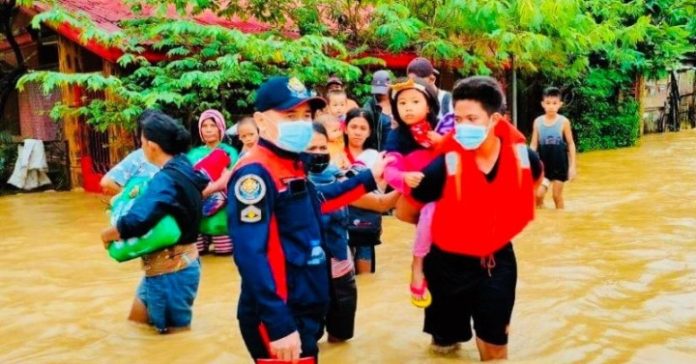
ILOILO City – Avoid flooded areas. Use protective gear such as boots or gloves if wading cannot be avoided.
This is the advice of the Department of Health (DOH) in Western Visayas as cases of leptospirosis rise.
Leptospirosis is a bacterial disease transmitted through direct contact with the urine of infected animals or urine-contaminated environments.
The bacteria can enter the body through skin cuts or abrasions, or the mucous membranes of the mouth, nose, and eyes.
Symptoms in the early stages include high fever, severe headache, muscle pains, chills, redness of the eyes, abdominal pain, jaundice, skin and mucous membrane hemorrhages, vomiting, diarrhea, and rashes.
Dr. Bea Camille Natalaraym, Medical Officer IV and head of the Emerging and Re-Emerging Infectious Disease (EREID) and Aedes-Vector Borne Diseases Prevention and Control Program of DOH Region 6, noted an increase in cases every rainy season.
“This is why the public must be cautious,” she said.
From January 1 to August 3 this year, the region recorded 244 leptospirosis cases, resulting in 14 deaths — a 64 percent decrease from the 687 cases and 44 deaths reported during the same period in 2023.
The breakdown of leptospirosis cases per province and highly urbanized city is as follows:
* Aklan – 10 cases
* Antique – 48 cases with three deaths
* Capiz – 19 cases with one death
* Guimaras – 7 cases
* Iloilo – 83 cases with three deaths
* Negros Occidental – 46 cases with two deaths
* Bacolod City – 12 cases with three deaths
Of the total 244 leptospirosis cases in the region, 223 are male and 21 are female.
The age groups most affected are:
* above 50 years old – 48 cases
* 41 to 50 years old – 36 cases
* 31 to 40 years old – 40 cases
* 21 to 30 years old – 58 cases
* 11 to 20 years old – 43 cases
* 1 to 10 years old – 5 cases
Dr. Natalaray advised the public, especially males aged 20 years and older who are most affected and often work as laborers and farmers, to avoid wading in floodwaters.
Maintaining cleanliness in the surroundings and ensuring safe drinking water is also crucial, she added.
Those exposed to floodwaters should consult a Rural Health Unit (RHU) and ask for prophylaxis to prevent infection by the leptospira bacteria, according to Natalaray./PN