


BACOLOD City – The City Government of Bacolod is studying the installation of a battery storage system for its solar power facilities to maximize renewable energy use and reduce electricity expenses.
Mayor Greg Gasataya said the city is considering upgrading the existing solar power system at the Bacolod City Government Center (BCGC) by adding batteries to store excess electricity instead of relying solely on net metering.
Under the net metering arrangement, surplus electricity generated by solar panels is exported to the power distribution utility. A battery storage system, meanwhile, would allow the city to store excess power for use when solar generation is low or electricity demand is high.
“I am asking the City Engineer’s Office (CEO) to study the next step, which is the installation of batteries,” Gasataya said.
The proposal forms part of the city’s efforts to expand renewable energy use and reduce operating costs amid rising fuel prices and the growing number of electric vehicles (EVs) in its fleet.
Gasataya said the city is also preparing to install solar power systems in selected public schools, prioritizing those with high electricity consumption. The proposed installations are expected to include inverters and battery storage systems to help schools reduce their electricity bills.
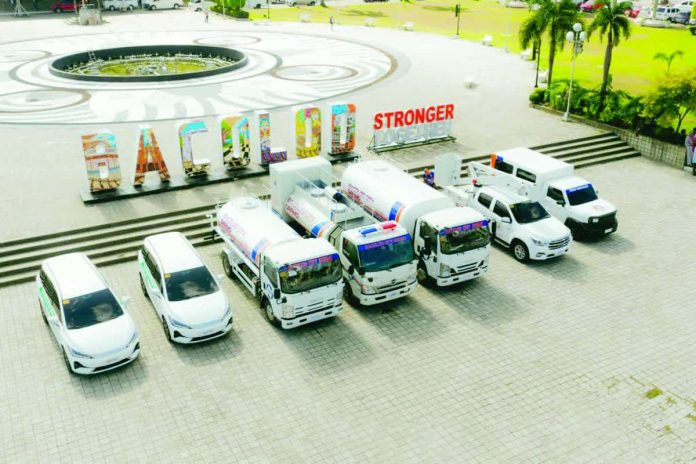
Meanwhile, the city government added seven vehicles to its fleet to strengthen emergency response, environmental management, public employment services and other municipal operations.
The vehicles were blessed during a ceremony led by Gasataya at the BCGC grounds on October 26.
The new units consist of one manlift for the CEO, two water tanker trucks and one water filtration truck for the Disaster Risk Reduction and Management Office (DRRMO), two EVs for the Bacolod Environment and Natural Resources Office (BENRO), and one vehicle for the Public Employment Service Office (PESO).
Gasataya said the acquisitions were based on an assessment of the city government’s operational needs, particularly the DRRMO’s requirements for water delivery and emergency response.
Although no El Niño declaration had been issued at the time, he said the additional vehicles would help the city prepare for potential water shortages and other emergencies associated with prolonged dry spells.
The DRRMO previously had to borrow vehicles from other offices or agencies to transport water and conduct flushing operations. With the new acquisitions, the city can deploy its own vehicles for these activities.
The water tanker trucks will support water distribution, while the filtration truck will provide treated water during emergencies and other situations requiring potable water.
Gasataya said the city now has three water tanker trucks and two water filtration trucks equipped with filtration systems.
The mayor also reaffirmed the administration’s commitment to expanding the city’s EV fleet to reduce fuel expenses and promote cleaner transportation.
The CEO is expected to acquire five more EVs, while the City Planning and Development Office is scheduled to receive two units. The city is also planning to acquire five patient transport vehicles or ambulances to strengthen health and emergency response services.
Gasataya said the city currently has 16 EVs and one charging station. Energy Secretary Sharon Garin has committed to providing an additional charging station in Bacolod next year at no cost to the city government.
The city plans to pursue further investments in solar power and electric mobility to improve energy efficiency and reduce operating expenses across government offices./PN