


ILOILO — As commercial fishing operations resumed following the lifting of the Visayan Sea closed season, authorities placed commercial vessel operators squarely on notice: compliance with fisheries, licensing, and safety regulations will be strictly enforced.
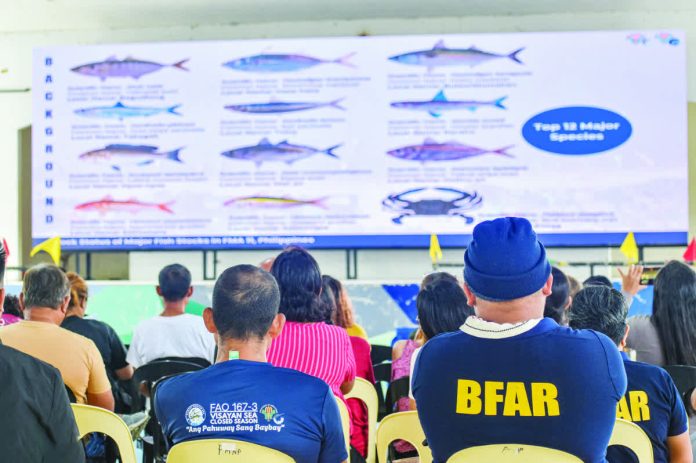
The Department of Agriculture’s Bureau of Fisheries and Aquatic Resources (BFAR) Region 6 gathered commercial fishing operators in Barangay Bancal, Carles, Iloilo recently, emphasizing that the reopening of one of the country’s richest fishing grounds comes with heightened regulatory expectations.
Sheryll Mesa, National Stock Assessment Program leader, reminded operators that measures such as the closed fishing season and mesh size regulations are not mere formalities but vital tools to sustain fish stocks and protect long-term commercial viability.
She reiterated that nets must comply with the minimum three-centimeter mesh size requirement (size 11) to prevent the capture of juvenile fish and maintain ecological balance in the Visayan Sea.
BFAR-6 Licensing Section officer-in-charge Mateo Doyola issued a clear warning to operators regarding the consequences of non-compliance.
“Failure to adhere to these regulations not only jeopardizes our fish stocks but can also result in legal consequences for operators,” he said.
BFAR-6 underscored that unauthorized fishing remains the most common Illegal, Unreported, and Unregulated (IUU) violation in Fisheries Management Area 11 and nationwide — a pattern authorities are determined to curb as commercial activities resume.
Beyond fishing gear regulations, operators were also reminded of the critical documentation and registration requirements before heading out to sea. Engr. Bernadeth Longakit of the Maritime Industry Authority (MARINA_ detailed the need for valid Certificates of Philippine Registry (CPR), Fishing Vessel Safety Certificates (FVSC), and Certificates of Ownership (CO).
Meanwhile, Engr. Leah Dela Cruz-Doromal of the National Telecommunications Commission (NTC) Region 6 stressed the importance of reliable communication systems for safety and emergency response.
“When our vessels head out to sea, the safety of our crew and the efficiency of our operations depend on effective communication systems,” she said.
BFAR-6 also reiterated the mandatory installation of a Vessel Monitoring System (VMS), coordination of inspections, and submission of complete Commercial Fishing Vessel License (CFVL) applications as part of strengthened enforcement measures.
Officials emphasized that while commercial operators are now free to resume fishing activities, authorities will intensify monitoring to ensure that sustainability and accountability remain central to every fishing expedition./PN