


MANILA – Investments approved by the Board of Investments (BOI) from January to May this year rose by 19 percent to P207 billion from P174 billion during the same period in 2017.
In a statement Thursday, BOI data showed that a big chunk of pledges in the first five months of 2018 came from the power sector, with registered projects amounting to P166.55 billion.
Other sectors with large project registrations with the BOI for the period include transportation and storage with pledges amounting to P39.82 billion, manufacturing with P19.36 billion, real estate with P14.54 billion, and water supply with P13.87 billion.
The bulk of the investment pledges from January to May this year were from local sources, with approved projects valued at P200 billion, increasing by 18.6 percent from last year’s registration of P169.09 billion.
Project registration from foreign investors likewise rose 29 percent to P7 billion this year from P5.38 billion in 2017.
The top sources of foreign investment pledges from January to May this year were Japan, Italy, China, the United States, and Hong Kong.
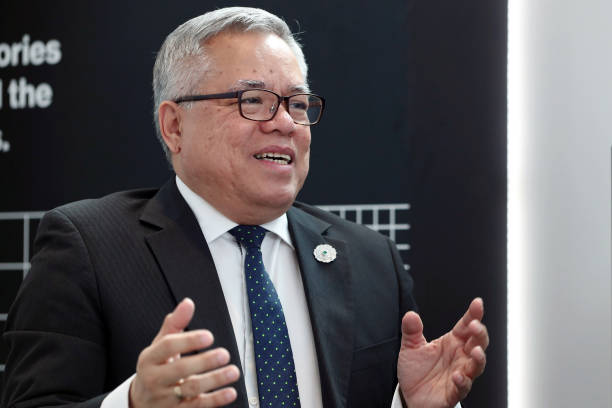
“These figures are just preliminaries. We expect more foreign investments to come in as a result of the various presidential visits and investment promotion activities conducted in the past months,” said Trade Secretary and BOI chairman Ramon Lopez.
“Our next goal now is to ensure that these investment pledges and job opportunities will materialize, and allow us to share the economic gains of the country, especially to those at the bottom of the pyramid,” added Lopez.
Moreover, Trade undersecretary and BOI managing director Ceferino Rodolfo said fiscal incentives in the Investment Promotion Agency are “primarily geared towards domestic investors in strategic industries.”
Thus, he said, the BOI is supportive of the second package of the Tax Reform for Acceleration and Inclusion (TRAIN) to attract more foreign investors to register their projects with the BOI.
Under the TRAIN Package 2, the government will modernize its fiscal incentives, making it focused, time-bound, performance-based, and transparent.
The tax reform program also eyes the BOI to be the lead agency in crafting the Strategic Investment Priorities Plan (SIPP), a list of preferred areas of investment activity. This is similar to the IPP of the BOI.
“What is important is that jobs (are) created here in the Philippines for the Filipino people, regardless of the ownership or market to be served. Markets for goods are already contestable under our free trade agreements,” Lopez previously stated. (PNA)