

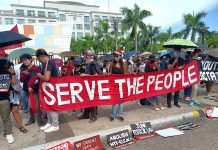


ON JUNE 2, the Uni Global Union–Philippine Liaison Council (Uni-PLC) wrote to newly installed Labor Secretary Francis Tolentino, urging him to conduct a comprehensive inspection of 14 dialysis centers nationwide operating under German-based Fresenius Medical Care Philippines, Inc. (FMCPI).
Uni-PLC, a labor organization representing workers in the health and allied services sector, informed Tolentino that it has received numerous complaints from FMCPI employees since 2022. These workers — including nurses, renal technicians, and other healthcare personnel — were reportedly deployed to FMCPI subsidiaries across the country, such as FMC Renal Care, Asia Renal Care, and Mindanao Renal Care, allegedly through labor-only contracting (LOC).
Based on available information, FMCPI employs nearly a thousand healthcare workers nationwide.
Negros-based Roland de la Cruz, president of Uni-PLC, said such an employment arrangement may be considered a “subterfuge” designed to circumvent workers’ rights. He added that it also undermines employees’ security of tenure.
‘YELLOW DOG CONTRACT’
What is equally alarming, according to de la Cruz, is the allegation that Fresenius discourages or prohibits its workers from joining labor organizations outside FMCPI, an act that directly interferes with their right to unionize.
Prohibiting employees from joining labor unions as a condition of employment constitutes what is commonly known as a “yellow dog contract,” which is prohibited under Philippine labor laws, de la Cruz explained.
Labor Law PH defines a yellow dog contract as an agreement requiring a person, as a condition of employment, not to join a labor organization or to withdraw from one to which he or she already belongs.
It bears stressing that Article III, Section 8 of the Constitution guarantees the right to freedom of association.
Likewise, Article XIII, Section 3 guarantees workers’ rights to self-organization, collective bargaining, and peaceful concerted activities.
Furthermore, de la Cruz argued that even if the subsidiaries operate legitimately, the delegation of work arrangements may still constitute unfair labor practice (ULP).
ALLEGED NOTABLE FLAWS
Aside from these concerns, Uni-PLC also accused FMCPI of committing several labor violations in the operation of its 14 dialysis centers nationwide.
Citing a Department of Labor and Employment (DOLE) Notice of Results issued after an inspection conducted on December 1, 2022, at Fresenius Kidney Care Shaw along Shaw Boulevard in Mandaluyong City—a copy of which was obtained by this writer—Uni-PLC claimed the company was found to have the following deficiencies:
• Underpayment of wages, overtime pay, premium pay, and holiday pay;
• Non-payment of mandatory social benefits, including health insurance and housing contributions;
• Failure to provide meal breaks;
• Incorrect computation of vacation and sick leave credits;
• Conflict-of-interest concerns;
• Absence of occupational safety and health programs;
• Lack of a trained safety officer;
• Failure to conduct mandatory occupational safety and health (OSH) seminars; and
• Refusal to disclose employment records.
According to de la Cruz, these findings remain unresolved to this day and have become part of what he described as a collective dispute between Fresenius and its workers.
Under international labor law, a collective dispute refers to a conflict between an employer and a group of employees—often represented by a trade union—concerning their rights, interests, or working conditions.
Given these circumstances, Uni-PLC said it had no choice but to assist the aggrieved workers who have sought refuge in the union.
Sadly, some workers have already resigned and moved on in search of better opportunities.
“Our union/council cannot ignore these labor complaints that we have been receiving from Fresenius workers,” de la Cruz stressed.
“We are both mandated and morally obligated to help these health workers at all costs.”
ZERO PROOF
Asked to comment in the interest of fairness and balance, Gillian Keung, director for Media Relations–Asia Pacific Global Affairs of Fresenius Medical Care, strongly denied the allegations raised by Uni-PLC.
In an email sent on June 2, Keung told this writer that Uni-PLC’s accusations regarding labor rights and workplace safety violations are not supported by facts.
In short, according to Fresenius: zero proof.
Keung further noted that Uni-PLC had already filed similar complaints in 2022. Those complaints, she said, were reviewed by DOLE and were eventually dismissed.
She added that in August 2025 and May 2026, DOLE issued certifications confirming that FMCPI had no pending labor cases.
Keung emphasized:
“Fresenius Medical Care is committed to upholding standards of employee welfare, workplace safety, and regulatory compliance.”
“We remain fully compliant with Philippine labor regulations and will continue to cooperate with the relevant authorities.”
FOR HEALTH WORKERS’ SAKE
During a Zoom interview on May 21, Eugenio Villasante, senior communications manager of Uni Global based in Switzerland, said Fresenius is also facing labor-related issues in the United States.
According to Villasante, charges for unfair labor practices have already been filed against the company there.
He also said Uni Global — a federation representing 900 trade unions across 150 countries — has repeatedly sought dialogue with Fresenius to address labor concerns, but those efforts have allegedly been ignored.
Meanwhile, Hovig Mel Konian, Uni Global Asia-Pacific director for organizing, said data gathered by their organization indicate that similar labor issues exist in many of the more than 50 countries where Fresenius currently operates.
For this reason, Konian described the alleged labor practices being experienced by workers worldwide as “horrendous.”
He stressed that all they are asking from Fresenius is adherence to the Global Framework Agreement (GFA) on labor practices and compliance with internationally accepted labor standards—for the sake of healthcare workers.
UNIGNORABLE
This collective dispute is difficult to ignore.
After all, it involves dialysis and healthcare workers, including some from Negros and Western Visayas.
When we speak of healthcare workers, we often think of:
• Unwavering dedication;
• Empathy;
• Comfort;
• Sacrifice;
• Resilience;
• Dignity;
• Compassion; and
• Humanity.
Healthcare workers around the world are often described as the pillars of compassion.
Their presence provides reassurance to those in need of medical care.
As frontliners in the battle against illness and disease, they should always be regarded as among the most valuable employees in any healthcare institution.
They deserve fair treatment.
They deserve decent compensation.
I understand where de la Cruz and Uni-PLC are coming from.
Showing genuine concern for fellow Filipino healthcare workers is humanity at its finest.
At the same time, I refuse to judge Fresenius outright.
I will wait for Secretary Tolentino’s response to de la Cruz’s request for a thorough review of Fresenius’ operations in the Philippines.
The new labor secretary is expected to act strictly in accordance with the law and established procedures.
As de la Cruz himself said, “I am hoping my request won’t be swept under the rug.”
As for me?
I am simply hoping that DOLE acts on the matter soon—rather than later.
After all, when labor concerns involve healthcare workers, no one can afford to look the other way./PN