



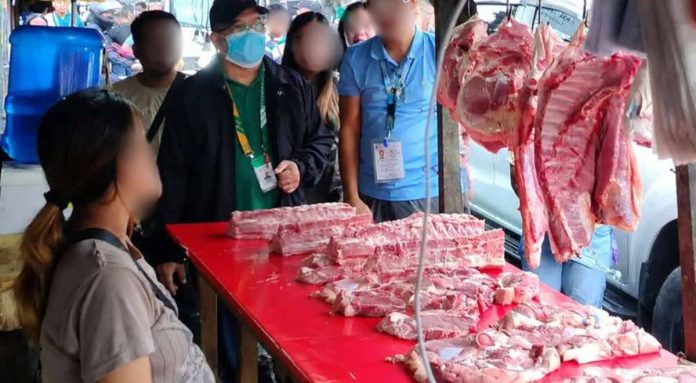
ILOILO City – The National Meat Inspection Service (NMIS) in Western Visayas has urged consumers to become “smart buyers” by checking whether meat shops, public market stalls, and supermarkets prominently display a valid Meat Inspection Certificate (MIC), stressing that the simple step is one of the best safeguards against unsafe pork products and the continuing threat of African Swine Fever (ASF).
The advisory comes as the agency intensifies enforcement of meat safety regulations and reminds the public that a valid MIC certifies that meat has undergone government inspection, is free from signs of disease, and is fit for human consumption.
Officer-in-Charge Regional Technical Director Dr. April Chavez of NMIS Regional Technical Operations Center 6 said consumers should not only look at the appearance or price of meat but also verify that it came from legitimate and inspected sources.
“Malaking tulong po kung ang consumers ay mas maging matalino, tinatawag nating matalinong mamimili sa paraan po ng pag-ensure na ang kanilang binibiling karne ay lihetimo, may meat inspection certificate, at nasusuri ang kanilang binibili,” Chavez told Panay News.
ASF is a deadly, highly contagious viral disease that affects domestic and wild pigs, causing up to 100% death rates in infected animals. It does not infect humans or pose a threat to human health, but it severely harms farming economies and food supplies.
The Meat Inspection Certificate guarantees that meat sold in stores has passed government inspection and that vendors comply with proper hygiene and sanitation standards while selling only documented and inspected meat products.
MICs are issued by NMIS meat inspectors, deputized inspectors assigned to licensed meat establishments and slaughterhouses, or meat inspectors from local government units operating accredited slaughterhouses.
Inspectors issue the certificates only after conducting both ante-mortem and post-mortem examinations.
Before slaughter, pigs are checked for signs of illness, including fever, skin abnormalities, and weakness.
After slaughter, inspectors examine the meat for discoloration, foul odor, bruising, and other abnormalities that could make it unfit for consumption.
They also verify the animal’s shipping permit and veterinary health certificate before certification.
“Pag-nakita na ng meat inspectors natin na okay naman ang hayop – walang sakit, malinis ‘yong karne at kanilang laman loob, sini-certify nila ‘yon na fit for human consumption. So, we issue meat inspection certificate. Ito ‘yong permit na puwedeng makita ng mga bumili na kinatay sa lehitimong katayan ang isang karne or ang binibili nilang karne, at required ang vendor na i-display yon sa selling areas,” Chavez said.
The MIC contains details such as the slaughterhouse, time of slaughter, destination of the meat, and the signature of the meat inspector.
Vendors are required to display the certificate in a conspicuous area where both consumers and inspectors can easily see it.
Chavez warned that meat products found without a displayed MIC during joint inspections by NMIS and local government units are confiscated and properly disposed of.
While the agency has yet to seize meat suspected of being infected with ASF, it has confiscated undocumented meat products lacking the required certification.
Apart from inspecting freshly slaughtered livestock, NMIS also examines imported meat stored in cold storage facilities to ensure frozen products distributed to markets also meet food safety standards.
The agency advised consumers to buy only fresh, pinkish meat with no foul odor and to ensure it is thoroughly cooked before consumption. It also reminded the public not to feed leftover meat dishes to pigs, a practice that could contribute to the spread of ASF.
Meanwhile, vendors were urged to display their MICs at all times, hang meat properly to minimize bacterial contamination, avoid using rusty nails or wooden hooks, use stainless-steel hanging materials instead, and ensure proper lighting so buyers can clearly see the meat’s natural color.
Separately, the NMIS RTOC 6 Enforcement Team, together with the Iloilo City Local Economic Enterprise Office, recently conducted a strike operation against roadside meat vendors in Molo, Iloilo City.
Authorities cited several violations, including unsanitary selling conditions, deteriorating meat products, and undocumented meat, resulting in Notices of Violation and the confiscation of 11.6 kilograms of pork cuts and 1.7 kilograms of chicken cuts./PN