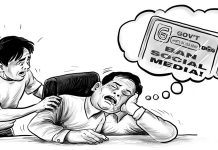




THE SEXUAL abuse of Filipino children, especially those committed online, continues to spread; so is their exploitation by not only their parents and relatives but also executives, telecommunications companies (telcos) and the clergy.
Children’s rights advocate Dr. Murray Heasley — about whom we will discuss later — is challenging clerical abuse. We need to take a cue from him and challenge telcos like PLDT, Globe Telecom and Dito Telecommunity, as well as other corporations, over their abuse. One of them, an electric cooperative, is refusing to replace a busted transformer until our Preda children’s home in Nagbayan village, Castillejos town, agrees to pay P125,123 for it, which is illegal. Unless you agree to pay, you get no power, the electric cooperative (EC) seemed to say. That seemed like blackmail.
The EC has been rocked by consumer complaints of overcharging and other issues, as well as by corruption allegations. On July 11, 2026, Zambales 1st District Rep. Jay Khonghun pushed for a congressional inquiry in the House of Representatives into the EC’s alleged corruption.
EC officials are aware of the suffering they have inflicted on the children, who are left crying and without electricity for days, causing hardship and fear. But these executives refuse to restore power until the children’s home pays them.
Preda has written to the EC manager to protest the EC’s alleged abuse, pointing out that cooperative is mandated to provide power and the transformer under Section 23 of Republic Act 9136, or the Electric Power Industry Reform Act of 2001. The EC must answer in court for causing harm and violating the children’s rights under RA 7610, or the Special Protection of Children Against Abuse, Exploitation, and Discrimination Act of 1992.
Telcos, as institutions, are also enabling child abuse by providing internet connections to child abusers, thus violating RA 9775, or the Anti-Child Pornography Act of 2009, and RA 11930, or the Anti-Online Sexual Abuse or Exploitation of Children and Child Sexual Abuse or Exploitation Materials Act of 2022. These firms violate these laws by failing to deploy effective software to block abusive content.
The crimes are committed by child abusers with mobile phones connected to cyberspace via internet service providers (ISPs), with which they use to livestream children being abused and record horrific images of it for transmission to pedophiles abroad for their sexual gratification.
Also, hundreds — if not thousands — of teenage boys are viewing these images on their mobile phones, with some sexually molesting other children as young as six years old. We can blame the ISPs for those crimes, too. They are spreading like wildfire on the internet, now made more powerful by artificial intelligence, or AI.
The Philippine National Police’s Women and Children Protection Center (WCPC) recently rescued more child victims of online sexual abuse. So far, the WCPC has rescued 45 of them. It has referred five groups of these children — nine to date — to different Preda homes for protection, healing, recovery and therapy. (To be continued)/PN