


ILOILO City — Child exploitation remains a challenge in Western Visayas. There were 12,800 child laborers profiled by the Department of Labor and Employment (DOLE) Region 6 last year.
Eliminating and preventing child labor is a collective responsibility, according to Melisa Navarra, the officer-in-charge assistant regional director of DOLE-6.
In the region, DOLE-6 is leading the initiative. After profiling these children, it refers them to various government agencies based on their specific needs.
The Department of Education (DepEd) addresses educational needs; the Technical Education and Skills Development Authority (TESDA) provides skills training; and the Department of Social Welfare and Development (DSWD), along with DOLE and local government units (LGUs), offer livelihood support for the parents.
In 2023, DOLE-6 allocated P32 million to fund livelihood projects for 1,194 parents of child laborers.
This funding is aimed at reducing the economic pressures that often drive families to permit their children to work, said Navarra.
In DOLE’s criteria, children under 18 are considered child laborers if they work particularly in hazardous conditions that threaten their safety, health, or development, or that hinder their education.
But it clarified that children over 15 may work in non-hazardous environments provided it does not affect their health, education, or development.
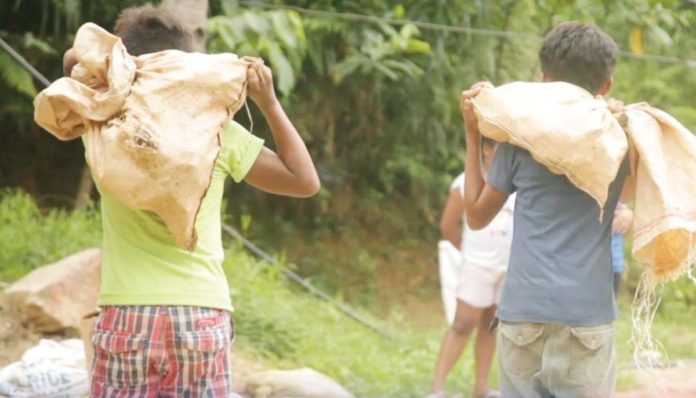
The region has seen cases of children employed in dangerous jobs, such as working with sharp tools in sugarcane plantations, which pose significant safety risks.
Children below 15 years old are generally prohibited from working, except in specific cases like advertising, where a Child Labor Working Permit from DOLE is required.
DOLE-6, in collaboration with various agencies and organizations, conducts regular advocacy campaigns to combat child labor. These include outreach at the barangay level and special initiatives aligned with the World Day Against Child Labor on June 12 and National Children’s Month in November.
Through its “Project Angel Tree” under the Child Labor Prevention and Elimination Program, DOLE provides child laborers and their families with gifts and aid.
Navarra emphasized the importance of community awareness and the role of schools in disseminating information about child labor laws and support programs.
She acknowledged that while economic hardship often leads families to engage their children in labor, it is crucial to ensure that such work does not endanger the children’s well-being or development.
She appealed to residents, especially parents, to prevent their children from engaging in child labor, underscoring that economic problems should not justify hazardous employment for children.
DOLE continues to support families by providing livelihood opportunities to alleviate the economic factors contributing to child labor, said Navarra.
Children are protected under Republic Act (RA) 9231, known as the “Elimination of the Worst Forms of Child Labor and Stronger Protection for the Working Child”, which prohibits employment that could harm their health, safety, or morals.
Violations of this law can lead to imprisonment of six months to 20 years, or fines from P50,000 to P1 million, or both, depending on the court’s decision./PN