



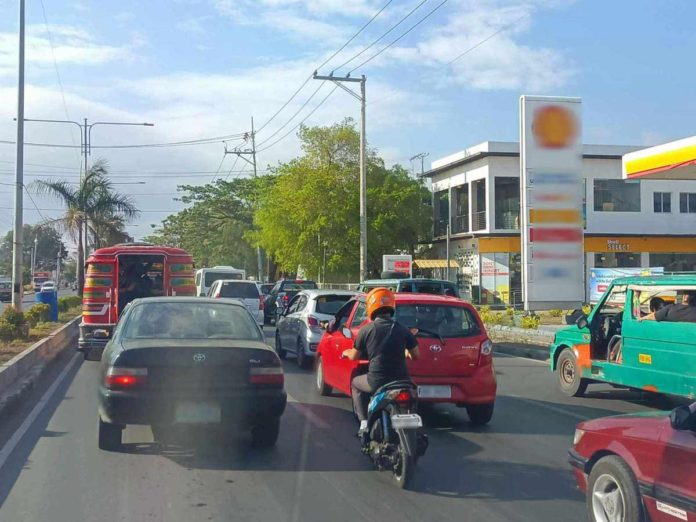
ILOILO City – The Land Transportation Franchising and Regulatory Board (LTFRB) Region 6 is leaving it to the city government to decide whether to implement a color coding or number coding system for private vehicles passing through the city.
LTFRB-6 projects that the number of private vehicles in the city will significantly increase over the next three years due to the rising purchasing power of the Ilonggos.
Atty. Salvador Altura Jr., officer-in-charge of LTFRB-6, said a substantial increase in private vehicle numbers would come with traffic congestion issues.
Retired police colonel Uldarico Garbanzos, head of the Iloilo City Traffic Management Unit (ICTMU), recently said the uncontrolled entry of “first town” jeepneys into Iloilo City from Iloilo Province exacerbated traffic congestion in the metro.
Jeepney operators and drivers, however, argued that the real problem is the unchecked and growing number of private vehicles entering the city.
“Whether color coding or numbering scheme, it’s basically a traffic regulation that the local government unit as to decide on,” said Altura.
Previously, the ICTMU proposed allowing only 25 percent of “first towns” jeepneys into the city, with an additional 15 percent as a buffer, to alleviate congestion.
But after much haggling last week, an agreement was finally signed by the Iloilo provincial government, Iloilo City government, and transport cooperatives and corporations – 40 percent of jeepneys from Iloilo Province’s “first towns” will be allowed entry into Iloilo City during peak hours and 25 percent during off-peak hours. The overriding goal is to manage traffic congestion without adversely affecting financially both the “first town” and city loop jeepneys.
The signatories included Gov. Arthur Defensor Jr., Garbanzos, representatives from “first town” local government units (Oton, San Miguel, Pavia, and Leganes) and transport cooperatives.
Under the agreement, all “first town” transport cooperatives are required to submit their dispatch plans/schedules from their point of origin to their specific routes on a weekly basis.
Forty percent of consolidated first town PUJs with stickers can enter the city during peak hours (6 a.m. to 9 a.m. and from 4:30 p.m. to midnight), while only 25 percent can enter during off-peak hours.
On Saturdays, 40 percent of jeepneys can enter the city for the entire day. During Sundays and holidays, 100 percent of “first town” jeepneys are allowed entry.
The agreement also stipulates that jeepneys are not permitted to load or pick up passengers while inbound to their destinations. Outbound units can only pick up passengers in designated loading and unloading areas.
Prolonged stops or “paugat”, creation of mini terminals, and trip cutting are strictly prohibited./PN