

ILOILO City – With this city regressing to General Community Quarantine (GCQ) due to rising cases of coronavirus disease 2019 (COVID-19), the Department of Health (DOH) Region 6 urged people to better think of themselves as already infected with the disease.
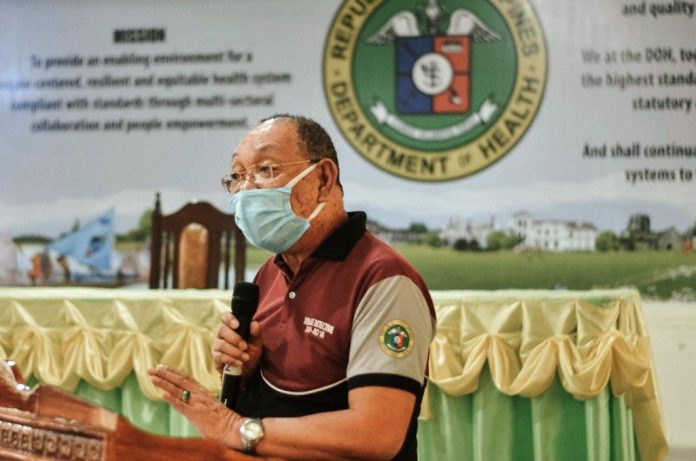
If people consider themselves infectious, they will be more cautious and start caring for people around them, explained Dr. Jessie Glen Alonsabe, DOH-6 epidemiologist.
Malacañang announced this city’s new quarantine status from Aug. 16 to 31 on Saturday. The rest of Western Visayas, on the other hand, remain under modified GCQ.
According to Alonsabe, people should have the mindset that wearing facemask is not merely intended to protect one’s self.
If one thinks of himself as already infected, “you would rather protect those around you, especially your family and loved ones,” said Alonsabe.
For her part, Dr. Mary Jane Juanico, DOH-6 infectious disease unit head, urged local government units (LGUs) to adjust their COVID-19 responses to new case developments.
Most of the COVID-19 cases in the region now belong to the working group, she revealed.
LGUs, hand in hand with national government agencies, must address the rise in COVID-19 cases in the workplace and public settings, stressed Juanico, by strictly enforcing risk-based public health standards.
These past two weeks, Iloilo City saw outbreaks of COVID-19 at the Iloilo Fish Port Complex and two call centers.
As of Aug. 15’s COVID-19 Regional Bulletin No. 141 of DOH-6, Iloilo City was leading other areas of Western Visayas in the number of cases – 525 (423 active cases, 91 recovered, 11 dead).
Alonsabe again appealed for the strict implementation of minimum health standards.
“Whatever level of community quarantine, if the minimum health standards are not observed, nothing good will happen. There must be consistent implementation,” said Alonsabe.
He was referring to, among others, the wearing of facemask and face shield, the observance of physical distancing and washing of hands with disinfectant or soap and water.
Bacolod City followed Iloilo City with 298 cases (240 active, 48 recovered, 10 dead).
Here are the other COVID-19 figures in the region:
* Iloilo province – 231 cases (143 active, 80 recovered, 8 dead)
* Negros Occidental – 161 cases (119 active, 40 recovered, 2 dead)
* Antique – 19 (4 active, 15 recovered)
* Capiz – 14 cases (7 active, 5 recovered, 2 dead)
* Guimaras – 12 cases (11 active, 1 recovered)
* Aklan – nine cases (2 active, 6 recovered, 1 dead)
As for repatriated overseas Filipinos, locally stranded individuals and authorized persons outside residence, the total confirmed COVID-19 cases in the region is 1,451 (518 active, 931 have recovered, 2 dead).
GCQ VS MGCQ
Under GCQ and MGCQ, all residents are required to observe minimum public health standards at all times.
Movement of people in GCQ areas is limited to accessing essential goods and services. Work in offices or industries permitted to operate are allowed.
Senior citizens and those below 21 years old, those with immunodeficiency, comorbidities or other health risks, and pregnant women are required to stay home unless when replenishing essential goods and seeking basic services, or if allowed to work in permitted industries.
In MGCQ areas, all persons regardless of age and health status are allowed outside their residence.
Work in government offices in areas under GCQ may be at full operational capacity or under alternative work arrangements as agencies may deem proper in accordance with the Civil Service Commission rules and regulations.
Physical reporting for work in government offices in MGCQ areas may also be at full capacity with alternative arrangements for those 60 years old and above, those with immunodeficiency, comorbidities or other health risks, and pregnant women.
In GCQ areas, the following can operate at full capacity:
* Category I industries – power, energy, water, utilities, agriculture, fishery and forestry, food manufacturing and food supply chain businesses, food retail establishments such as supermarkets, food preparation establishments limited to takeout and delivery services, health-related establishments, logistics, information technology and telecommunications, and media
From 50 percent to full capacity, the following can operate in areas under GCQ:
* Category II Industries – mining and other manufacturing, electronic commerce, delivery, repair and maintenance, and housing and office services
The following can operate up to 50 percent capacity in areas under GCQ:
* Category I industries – financial services, legal and accounting, auditing services, professional services, scientific services, technical services, non-leisure services, non-leisure wholesale and retail
* Industries under Category I to III are allowed to operate at full capacity in areas under MGCQ while the following may operate at 50 percent capacity: barbershops, salons, and other personal care establishments, and dine-in services in food retail establishments.
In transportation, road, rail, maritime, and aviation sectors of public transport shall operate at a reduced operational and vehicle capacity in areas under GCQ, given that minimum health standards are observed. A minimum of one-meter physical distancing in public transport is required.
Meanwhile, road, rail, maritime, and aviation sectors of public transportation will be allowed to operate in accordance with the guidelines of the Department of Transportation. A minimum of one-meter physical distancing is likewise required in public transportation.
As for mass gatherings such as but not limited to movie screenings, concerts, sporting events, and other entertainment activities, community assemblies, religious gatherings, and non-essential work gatherings, these are prohibited in areas under GCQ.
However, mass gatherings essential for the provision of government services or authorized humanitarian activities are allowed.
On the other hand, public gatherings in areas under MGCQ are allowed provided that participants will be limited to 50 percent of the venue or seating capacity./PN