
ILOILO City — Population authorities are turning smartphones into a frontline tool against child pregnancy in Western Visayas, seeking to deliver reproductive health information directly to young people as live births among girls aged 10 to 14 nearly doubled in four years.
The Commission on Population and Development (CPD) Region 6 is expanding its digital campaign through the AHlam Na! 3.0 application, capitalizing on data showing that 94.3 percent of young people have smartphones.
The application provides age-appropriate information on reproductive health, sexuality, population and development, allowing younger adolescents to access resources that may not be readily available through traditional education programs.
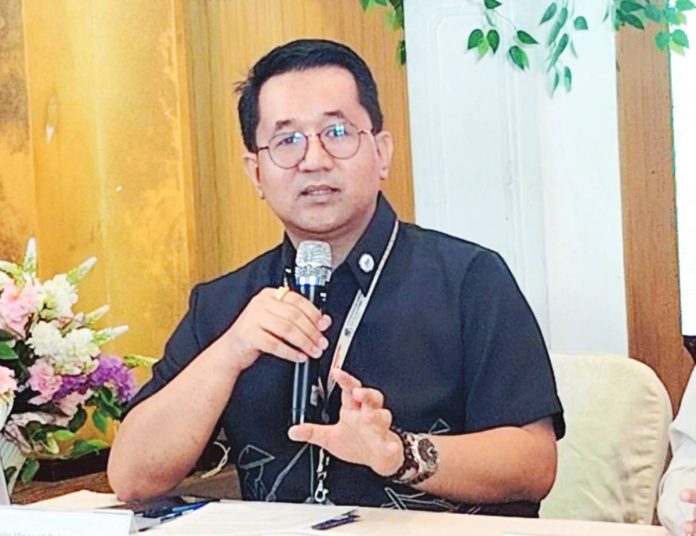
“Traditional health education methods such as symposiums have limited reach,” CPD-6 Population Program Officer IV Dr. Roilo Vincent Laguna said.
“Now, with the integration of technology, young people can access critical information and services directly through their smartphones, allowing for greater engagement,” he added.
The digital campaign comes as Philippine Statistics Authority data showed that live births among girls aged 10 to 14 in Western Visayas surged by 91.4 percent, from 58 in 2020 to 111 in 2024.
The increase has prompted CPD-6 to redirect its adolescent pregnancy interventions toward younger children. Its previous programs had concentrated largely on adolescents aged 15 to 19, whose pregnancy figures are now gradually declining.
“Although we have observed a gradual decline in pregnancies among the 15-19 age group, we are now confronted with troubling statistics featuring a sharp increase in pregnancies within the 10-14 age demographic,” CPD-6 regional director Harold Marshall said.
Marshall said conventional adolescent health strategies must be adapted to address the developmental and social circumstances of younger children.
“To effectively tackle this issue, we must develop a more comprehensive approach that caters specifically to the unique developmental and social contexts of these younger adolescents,” he said.
CPD-6 identified limited reproductive health awareness and inadequate access to accurate information as among the factors contributing to early pregnancies.
Because they are minors, young adolescents also face barriers in accessing family planning services and other reproductive health resources.
Aside from the mobile application, information on reproductive health and sexuality is available through CPD’s online pages. The agency is also coordinating with the Department of Health to strengthen its health education and advocacy programs.
CPD-6 said the digital campaign is particularly critical given the communication gaps revealed by the Young Adult Fertility and Sexuality Survey conducted by the University of the Philippines.
Only 20 percent of young respondents said they were comfortable discussing sex at home, while just 15.4 percent knew about available treatment for human immunodeficiency virus and acquired immunodeficiency syndrome.
The survey also found broader health and behavioral concerns among the region’s youth.
Western Visayas ranked second nationwide in youth smoking prevalence at 15.7 percent, while 32.1 percent of respondents reported consuming alcohol, placing the region fifth in the country. Meanwhile, 21.4 percent said they had contemplated self-harm or suicide.
CPD-6 said harnessing young people’s widespread access to smartphones could help break information barriers, connect them with reliable health resources and strengthen efforts to prevent pregnancies among very young adolescents./PN