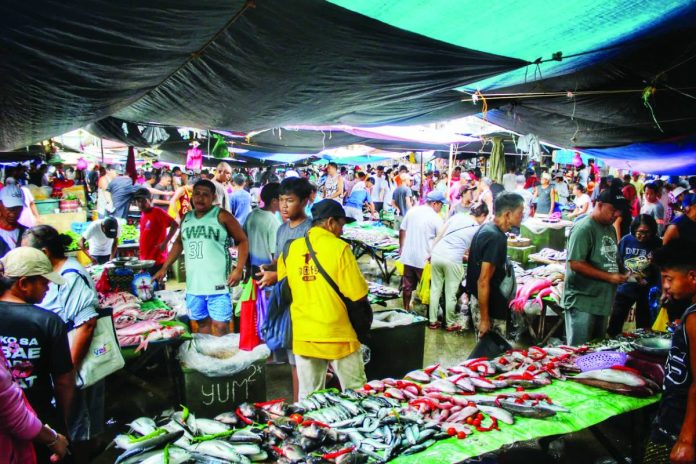
BY NELJOY GALIGAO and MA. THERESA LADIAO
ILOILO City – The poorest families in Western Visayas are suffering disproportionately from soaring consumer prices, with inflation among low-income households reaching 11.7 percent in September 2026, significantly higher than the region’s overall 9.2 percent rate, as a steep 30 percent rice inflation further squeezes already strained household budgets.
Inflation refers to the general increase in the prices of goods and services over time, reducing the purchasing power of money.
Data released by the Philippine Statistics Authority (PSA) on October 8 showed that inflation among the region’s bottom 30 percent income households accelerated from 10.7 percent in August, surpassing the nine percent national inflation rate recorded for the same income group.
The figures reveal a widening disparity in the burden of rising consumer prices, with economically vulnerable families experiencing sharper increases in the cost of basic necessities than the general population.
Western Visayas’ headline inflation rose to 9.2 percent in September from 8.4 percent in August, two percentage points higher than the national inflation rate of 7.2 percent.
The latest regional figure also represents a dramatic increase from the 0.2 percent inflation recorded in September 2025, underscoring the sharp deterioration in consumer purchasing power over the past year.
RICE PRICES LEAD SURGE
Rice, the staple food of Filipino households, emerged as a major source of inflationary pressure, with its annual inflation rate accelerating to 30 percent in September from 28.3 percent in August.
The PSA reported that inflation in cereals and cereal products, which include rice, climbed to 24 percent from 21.4 percent.
This commodity group accounted for a staggering 82.2 percent of overall food inflation, contributing 7.07 percentage points to the region’s 8.6 percent food inflation rate.
Food inflation accelerated from 7.1 percent in August, reversing the negative 2.5 percent recorded in September last year.
Other food commodities also registered substantial price increases.
Inflation in fish and other seafood accelerated to 7.3 percent from 4.4 percent, while fruits and nuts recorded a sharper increase to 10.4 percent from 6.2 percent.
Oils and fats posted inflation of 11.4 percent, compared with 10.8 percent in August, while sugar, confectionery and desserts increased to 0.9 percent from 0.5 percent.
Meanwhile, inflation in milk, dairy products and eggs eased to 1.6 percent from 2.2 percent.
Vegetables, tubers, plantains, cooking bananas and pulses registered negative 0.5 percent inflation, indicating slightly lower prices compared with September 2025.
Meat and other parts of slaughtered land animals also continued to record negative inflation at 4.9 percent, although the decline in prices narrowed from negative 5.4 percent in August.
POOREST FAMILIES UNDER PRESSURE
The PSA figures revealed that food and non-alcoholic beverages accounted for 51.3 percent of the inflation experienced by the region’s bottom 30 percent income households.
Inflation in this commodity group accelerated to 10.5 percent in September from 8.8 percent in August, contributing 6.01 percentage points to the 11.7 percent inflation rate among low-income households.
Housing, water, electricity, gas and other fuels contributed another 2.54 percentage points, while transportation accounted for 1.29 percentage points.
The disproportionate impact on low-income families reflects their greater dependence on essential goods and services, leaving them with fewer opportunities to adjust spending when prices increase.
For households already struggling to meet daily expenses, sustained inflation threatens to further erode purchasing power and reduce the amount available for other necessities, including healthcare and education.
AKLAN, ANTIQUE, ILOILO HARDEST HIT
Inflation accelerated across nearly all provinces in Western Visayas, with three provinces recording double-digit rates.
Aklan registered the highest inflation at 11.6 percent in September, up from 10.7 percent in August.
Antique followed closely at 11.1 percent, increasing from 10.3 percent.
Iloilo province ranked third with inflation reaching 10.4 percent, compared with 9.7 percent in the previous month.
Iloilo City recorded a comparatively lower inflation rate of 7.8 percent, although this represented an increase from 7.6 percent in August.
Capiz posted 5.1 percent inflation, up from 3.8 percent, while Guimaras registered the lowest rate in the region at 4.9 percent, unchanged from August.
The PSA noted that all provinces and Iloilo City, except Guimaras, experienced faster inflation during the month.
FOOD, UTILITIES, TRANSPORT DRIVE INFLATION
At the regional level, three major commodity groups accounted for approximately 73.7 percent of the overall inflation rate.
Food and non-alcoholic beverages contributed the largest share at 38.7 percent, equivalent to 3.56 percentage points of the 9.2 percent headline inflation.
Housing, water, electricity, gas and other fuels accounted for 17.9 percent, contributing 1.64 percentage points, while transport represented 17.1 percent, equivalent to 1.58 percentage points.
Inflation in food and non-alcoholic beverages accelerated to 8.2 percent from 6.8 percent in August.
Housing and utilities inflation increased to 9.2 percent from 8.9 percent, while transportation inflation climbed to 17 percent from 16.8 percent.
Restaurants and accommodation services also registered elevated inflation at 14.9 percent, compared with 14.4 percent in August.
Healthcare inflation rose to 8.8 percent from 7.6 percent, while furnishings, household equipment and routine household maintenance increased to 9 percent from 8.6 percent.
Clothing and footwear inflation reached 4 percent from 3.8 percent, while information and communication services increased to 2.9 percent from 2.2 percent.
Some commodity groups recorded modest relief.
Inflation in alcoholic beverages and tobacco eased to 8.5 percent from 8.6 percent, while personal care and miscellaneous goods and services declined slightly to 3.6 percent from 3.7 percent.
Education services maintained an inflation rate of 11.1 percent, recreation, sport and culture remained at 7.5 percent, and financial services stayed unchanged at zero percent.
REGION OUTPACES NATIONAL INFLATION
For the first nine months of 2026, Western Visayas registered an average inflation rate of 6 percent, higher than the national average of 5.4 percent.
The September figures point to mounting economic pressure on households throughout the region, with the sharp increase in rice prices and other essential commodities particularly affecting families that spend a substantial portion of their earnings on food.
Although the 9.2 percent regional inflation rate does not mean that all commodity prices increased by the same amount, it indicates a broad rise in the cost of goods and services compared with the same period last year.
The even higher 11.7 percent inflation rate among the poorest households illustrates the unequal burden of rising prices, as families with the least financial resources experience the greatest pressure on their daily budgets.
With food, utilities and transportation continuing to dominate regional inflation, the latest PSA figures underscore the urgency of measures to stabilize essential commodity prices and protect vulnerable households from further erosion of their purchasing power./PN