



ILOILO City – Western Visayas is fortifying its agricultural defenses against a potentially devastating El Niño, with the Department of Agriculture (DA) rolling out crop shifts, cloud seeding, expanded irrigation and modern farming technologies.
The preparations take on greater urgency as Western Visayas is one of the country’s major agricultural and food-producing regions where prolonged water shortages could threaten crop production, farmers’ livelihoods and regional food security.
DA-Western Visayas regional executive director Dennis Arpia said the agency began preparing its response as soon as the Philippine Atmospheric, Geophysical and Astronomical Services Administration (PAGASA) announced that a very strong El Niño could affect the country beginning this October and persist through the first quarter of 2027.
Among the measures being pursued is the continued education of farmers, local government units (LGUs) and other stakeholders on maximizing agricultural production in areas where water remains available.
The DA is encouraging farmers in these areas to use better seed varieties to boost yields, while those in places facing water shortages are being advised to shift to high-value crops, including corn.
Arpia said several LGUs and farmers have already written DA requesting corn varieties suitable for planting under El Niño conditions.
Cloud seeding operations have also been programmed for parts of Western Visayas, including northern Iloilo, as the government attempts to augment rainfall where conditions permit.
“’Yung unang bahagi ay patapos na at isasagawa natin ang kasunod. Tinitingan natin hangga’t appropriate at mayroon seedable clouds. Patuloy tayong nag-aaral kung saan pwede,” Arpia said.
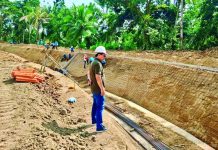
The DA is likewise working to expand irrigation capacity to bring more farmland within reach of reliable water sources.
Arpia said the Jalaur River Multi-Purpose Project Stage II (JRMP II) in Calinog, Iloilo, which is expected to become fully operational by the end of 2027, could significantly strengthen the region’s irrigation capacity and help maintain water supply during future El Niño episodes.
Solar-powered irrigation systems are also being implemented as part of efforts to modernize the region’s agricultural infrastructure.
Beyond emergency interventions, Arpia stressed that increasingly unpredictable weather conditions require farmers to move away from purely traditional agricultural practices and embrace modern technology.
“Hindi po pwede na traditional lamang ang ating approach. Tayo po ay patuloy na nanawagan hindi lang po sa ating mga farmers at partner-LGUs kundi pati po sa ating media, mga influencers sa social media. Spread the word on new technologies. kung paano ang farmers natin maka-adjust, maka-adopt sa mga challenges dahil sa pagbabago ng panahon and global uncertainties ay. Na hindi lamang maging resilient ang farmers natin kundi maging competitive. Kami ay laging bukas makipagtulongan sa private sector,” he said.
Arpia also assured the public that the department has prepared buffer stocks of palay and rice, as well as seeds and other assistance that could be provided to farmers who need to shift to more resilient crops.
“Wihile kinakabahan tayo sa El Niño, the food security of Western Viysa is very much okay,” Arpia said.
The preparations come as Science and Technology Secretary Renato Solidum Jr. warned that all provinces in the Philippines are expected to experience drought by March 2027 as the effects of El Niño intensify.
“By the end of March, all provinces,” Solidum said during a Palace briefing on Monday, Oct. 5, when asked how many provinces could experience drought or very dry conditions.
Drought is generally characterized by several consecutive months of abnormally low rainfall — either three straight months with rainfall more than 60 percent below average or five consecutive months with rainfall 21 to 60 percent below normal.
Solidum, however, clarified that the term “Super El Niño” describes conditions in the Pacific Ocean and does not necessarily mean that its effects will be equally severe across the Philippines.
“Super El Niño is a description of the condition in the Pacific. Its effects on us will vary. As you can see, the provinces experiencing more severe drought are expected to be affected next year, not now, because there is a time lag in its effects,” he explained.
“So, we need to clarify to our fellow Filipinos that the term “El Niño” describes the condition in the Pacific, not in the Philippines. When we say El Niño, it means that sea surface temperatures are much higher than normal. However, its effects here, such as whether there will be insufficient rainfall, will still depend on the amount of rain that comes and how much rainfall we receive,” he added.
Solidum said the southwest monsoon had so far masked the effects of El Niño, explaining why its full impact has yet to be felt./PN