

ILOILO City – From January 1 to May 11 of this year, Western Visayas recorded 2,837 dengue cases, including six deaths – an 18 percent increase from the 2,411 cases reported during the same timeframe last year.
Data from the Department of Health (DOH) Region 6’s Epidemiology and Surveillance Unit (RESU) showed that in the week spanning May 5 to May 11 alone, 210 new cases were reported, along with one fatality.
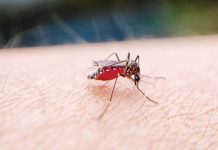
Dengue is a mosquito-borne viral infection that causes severe flu-like symptoms and can be fatal in extreme cases.
Symptoms include a sudden high fever, severe headache, nausea, muscle and joint pains, and red spots or patches on the skin.
The provinces and highly urbanized cities most affected include Iloilo Province with 63 new cases, Bacolod City with 34 new cases, and Negros Occidental with 24 new cases, where the recent fatality — a 61-year-old woman — was also reported.
The public’s habit of storing water in containers due to the ongoing El Niño phenomenon that induces fewer rainfall and water scarcity is believed to contribute significantly to mosquito breeding, thus increasing the risk of dengue transmission. Dengue mosquitoes breed in clear, stagnant water.
DOH-6 has also noted an increased attack rate in the provinces of Aklan, Antique, Capiz, Iloilo, and Guimaras compared to last year.
Additionally, 22 barangays in the region have shown clustering of dengue cases, which refers to three or more cases recorded in four consecutive weeks.
The age range of those affected spans from less than one year old to 98 years old, with the median age at 17.
The most affected age group is children aged one to 10, comprising 41 percent of the total cases.
The breakdown of cases and fatalities per province or city is as follows:
* Aklan – 467 cases, one death
* Antique – 221 cases
* Capiz – 388 cases
* Guimaras – 147 cases
* Iloilo – 880 cases, three deaths
* Negros Occidental – 398 cases, two deaths
* Bacolod City – 123 cases
* Iloilo City – 213 cases
Given the expected rise in dengue cases due to the El Niño phenomenon, DOH-6 is intensifying its campaign against dengue using the 5S approach: search and destroy mosquito breeding sites, self-protection measures, seek early treatment, support fogging or spraying in hotspot areas, and sustain hydration by continuing to drink oral rehydration solutions as advised by healthcare providers./PN