
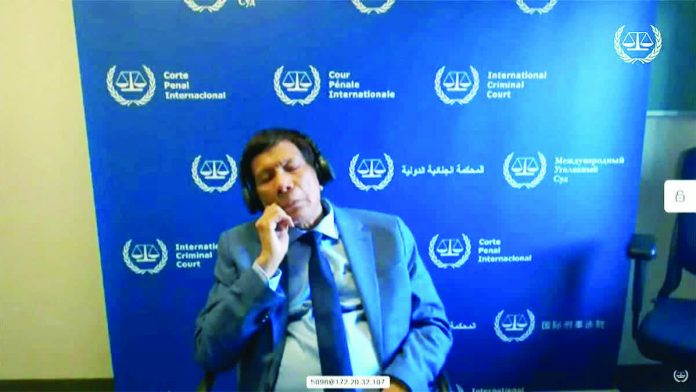
MANILA — Former Philippine president Rodrigo Duterte has filed a fresh plea before the International Criminal Court (ICC) seeking interim release from detention, with his defense citing new medical findings that allegedly show a significant deterioration in his physical and cognitive condition.
In a submission dated January 9 to ICC Pre-Trial Chamber I, Duterte’s lead counsel, Nicholas Kaufman, presented a joint medical report prepared by the former president’s personal physicians, arguing that his current health status no longer supports the prosecution’s justification for continued detention.
“The new medical evidence is proffered in order to assist the Pre-Trial Chamber in assessing whether Mr. Duterte’s medical condition sufficiently mitigates his capacity to actualise the statutory risk factors, such that his release to the State Party that has expressed its willingness to receive him may now be contemplated,” the filing stated.
Kaufman said the assessment concluded that Duterte no longer possesses the mental and physical capacity to evade supervision, interfere with proceedings, or pose a threat to witnesses. The report found that Duterte “lacks executive functioning, sustained planning capacity, rapid decision-making, physical stamina, and the ability to evade supervision,” functions that were described as “either clearly compromised or, at a minimum, practically unavailable to him in his current condition.”
“These capacities are either clearly compromised or, at a minimum, practically unavailable to him in his current condition,” Kaufman said, adding that neither the defense’s physicians nor ICC-appointed medical experts detected “any clinical indication of disinhibition, aggression, or manipulative behavioral tendencies.”
“To conclude, the notion of witness intimidation does not align with Mr. Duterte’s functional abilities or with the realities of an environment where his liberty is restricted and strictly supervised,” he added.
The defense also disputed claims that Duterte could commit further crimes if released, arguing that his impaired health would prevent him from exercising authority or directing others. According to Kaufman, Duterte’s “impaired executive functioning, lack of sustained attention, and corresponding inability to plan and to sequence his daily activity would negate his ability to oversee complex chains of command.”
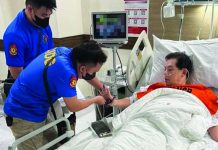
Describing Duterte’s current condition, Kaufman referred to him as an “emaciated, infirm and incapacitated shadow of his former self,” citing significant weight loss and the fact that he is under continuous round-the-clock video monitoring. He said the surveillance was imposed not because Duterte posed a danger, but “based on a grounded fear that harm might befall him.”
“Mr. Duterte is unable to attend to his own nourishment or to his own medication,” Kaufman said, noting that ICC judges have not physically seen the former president for about 10 months.
“When he is finally invited to attend a hearing on his detention… his purported propensity to flee, threaten, or commit crime will be exposed to the world for what it is – a wholly unreasonable and fanciful assertion,” he added.
Kaufman also rejected suggestions that Duterte was exaggerating his illness, saying court-appointed experts found no evidence of malingering and could not account for observations of cognitive “underperformance.”
“For this reason alone, it would be wrong for the Pre-Trial Chamber to dismiss Mr. Duterte’s impaired functioning as an attempt to ‘feign illness,’ as the Prosecution insultingly asserts without any foundation whatsoever,” he said.
“In light of all the aforementioned, the Pre-Trial Chamber is requested to ORDER the interim release of Mr. Duterte,” Kaufman added.
The ICC has yet to rule on the renewed request. Prosecutors have previously maintained that Duterte remains capable of meaningfully participating in court proceedings./PN