
NON-PROFIT organization Philippine Business for Education (PBEd) called on the government to allocate more funds to education, saying its allotted budget under the 2026 National Expenditure Program (NEP) falls short of the UNESCO standard.
In a statement, the business group encouraged the government to invest more in Filipino education, nutrition, and healthcare.
“We must allocate our resources where it matters most, because every peso wasted denies our people access to vital programs — such as education, nutrition and healthcare — that they rightfully deserve,” PBEd Executive Director Bal Camua said.
It said the education sector remains “underfunded”, arguing that the P1.178 trillion allocated for education under the 2026 NEP is only “around 3.8 percent of gross domestic product (GDP), short of the UNESCO standard of at least four to six percent.”
The group also cited the Second Congressional Commission (EDCOM II) on Education’s Year Two report which mentioned that the Philippines “still fails to keep pace with global standards” since the current spending for education is only around 3.2% of the country’s GDP.
The report highlighted problems in program implementation, policy direction, and weak links between education and employment strategies.
The report stressed that although the budget increased for education from 2013 to 2024, the growth became “flat” due to inflation.
OPEN DELIBERATIONS
As the House of Representatives opened its doors for third-party observers on its deliberation on the 2026 NEP, PBEd said sustaining people’s access to the talks can help strengthen accountability.
The group believes no “insertion” and “inefficiencies” should become reasons to get lower education funding.
“We cannot afford to let insertions and inefficiencies eat into the education budget. Every year we delay meeting the standard, we risk losing a generation. Opening the budget deliberations from start until its passage will help strengthen accountability and ensure that public funds truly serve the people,” Camua said.
According to the tentative schedule from the House Committee on Appropriations, the Department of Education (DepEd) will present its proposed budget on September 3 while the Commission on Higher Education is scheduled on September 12.
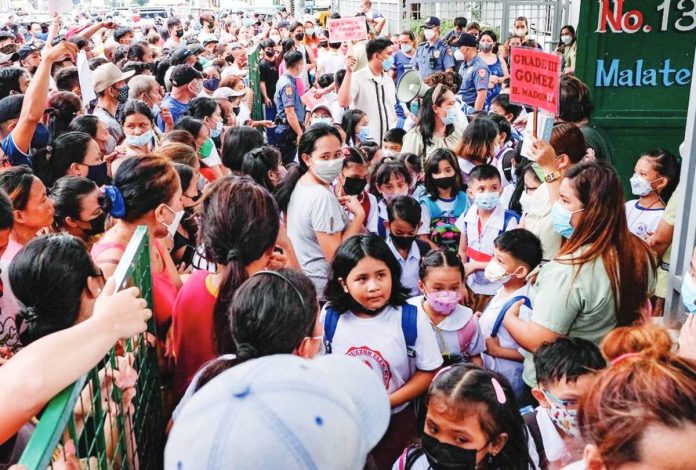
Education Secretary Sonny Angara bared in May 2025 the classroom backlog was at 165,000 and it would take 30 years to address this given the current education funding.
CREATION OF EWDG
PBEd said it supports the creation of the Education and Workforce Development Group (EWDG) as the central coordinating mechanism that will ensure that education programs are aligned with the needs of the labor market.
The establishment of the EWDG comes after the release of the EDCOM II report.
Under Administrative Order No. 36 signed on Aug. 13, the group is tasked to “strengthen teacher training, curriculum development, skills upgrading, and lifelong learning programs” while also partnering with private organizations and international institutions.
President Ferdinand Marcos Jr. heads the committee, while Angara and Labor Secretary Bienvenido Laguesma are among its members. (ABS-CBN News)