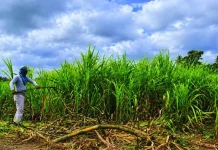




THE APPROACHING El Niño should inject a new sense of urgency into the completion of the Jalaur River Multi-Purpose Project Stage II (JRMP II). At 87.64 percent complete as of August, Iloilo’s P25.66-billion mega dam is tantalizingly close to becoming the agricultural shield it was built to be. But in the face of a potentially punishing dry spell, “almost finished” is not good enough.
The reason is simple: water stored behind a dam means little to a farmer if it cannot reach his field.
JRMP II’s reservoir can hold 250 million cubic meters of water and currently contains about 112 million cubic meters. Even before becoming fully operational, the project is already irrigating more than 500 hectares in the Calinog barangays of Badu, Aglibacao, Lonoy and Alibunan. Around 50 hectares have even managed a third cropping because of continuous irrigation. Water released toward the Moroboro Dam can also augment supplies for around 10,000 hectares in Dingle, Pototan and Barotac Nuevo.
These are encouraging results. They are also a tantalizing glimpse of what Iloilo could gain once the entire system is operational. But therein lies the problem. The dam may hold the water, but the canals must carry it.
Of the project’s 80.736-kilometer High Line Canal, almost 50 percent has been completed, while more than half of nearly 160 kilometers of main and lateral canals has been finished. The National Irrigation Administration (NIA) says all facilities are targeted for completion by June 2027, with operations expected by the end of December 2027 or early 2028.
Those remaining kilometers must now be treated with the urgency they deserve.
Western Visayas is staring at a prolonged dry period beginning this October. Rainfall is forecast to deteriorate from below normal in October and November to way below normal from December through March. Water shortages, drought, extreme heat and pressure on agriculture and power supply are among the threats confronting the region.
The climate will not wait for construction schedules. Neither can farmers. Every unfinished canal represents agricultural land that may not yet receive the full benefit of water already sitting in the reservoir. Every unnecessary delay potentially means farms left more vulnerable to drought, crops exposed to moisture stress and farming families forced to gamble against increasingly unpredictable weather.
This is why NIA, contractors and every government agency involved in JRMP II must make completion of the remaining works an overriding priority. That does not mean cutting corners. Quite the opposite. What is required is disciplined acceleration: sufficient manpower and equipment, close supervision of contractors, prompt resolution of bottlenecks, strict compliance with construction standards and transparent reporting of accomplishments against deadlines.
The early performance of JRMP II demonstrates its enormous potential. Even partially operational, it is already allowing farmers to continue planting and giving NIA another mechanism for supplying thousands of hectares downstream. That should strengthen, not weaken, the argument for finishing the remaining infrastructure as quickly and properly as possible.
Iloilo has waited decades for Jalaur to become the water-security infrastructure envisioned for its agricultural heartland. Climate change and increasingly severe dry spells have made that investment even more important than when it was conceived.
The coming El Niño may expose weaknesses in the province’s water security. It may also demonstrate why JRMP II was necessary in the first place. So complete the canals. Finish the system. Hold contractors to their deadlines and NIA to its commitments. Because the next drought will not ask whether Jalaur is 87 percent, 95 percent or 99 percent complete. It will simply come.
Jalaur must get there first.