



FLOODWATER does not stop at a barangay boundary, recognize whether a drainage line belongs to the city or the Department of Public Works and Highways, or ask which developer altered the natural path of runoff.
It simply flows — usually toward the lowest and most vulnerable communities.
This is why Iloilo City’s perennial flood problem demands one coordinated strategy involving the city government, DPWH, barangays, utility companies, private developers and neighboring local government units. Without unified planning, one project may merely transfer floodwater from one place to another.
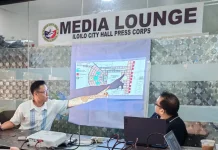
The proposed Comprehensive Drainage Masterplan provides an opportunity to end this fragmentation. The plan must not be limited to cataloguing drainage lines under the city government. It should map the entire movement of rainwater — from upland and neighboring areas, across roads and developments, through canals and rivers, and finally toward the sea.
This is urgent because the city’s drainage system was designed for weather conditions that no longer exist. A disconnected system makes the danger worse.
The city may clear a drainage canal, but that effort will achieve little if a DPWH culvert downstream is undersized. DPWH may widen a drainage line, but the project can worsen flooding elsewhere if its discharge point is blocked. A barangay may remove garbage from waterways, only to receive waste and floodwater from an adjoining community.
Utility companies can also unintentionally obstruct water flow when pipes, cables, poles and other installations occupy drainage spaces or interfere with improvement projects. They must be required to share accurate infrastructure maps and relocate facilities when these compromise drainage capacity.
Private developers must likewise be part of the solution. Subdivisions, malls, warehouses, parking areas and other large developments replace absorbent soil with concrete, accelerating runoff into public drainage systems. Developers should not simply channel their stormwater toward the nearest roadside canal and consider their responsibility fulfilled.
Every major development must be required to show how it will retain, absorb or safely release the additional water it generates. Retention facilities, permeable surfaces and adequate outfalls should be actual operating requirements — not drawings presented merely to secure permits.
But the strategy cannot end at Iloilo City’s borders.
Floodwater from Pavia, Oton, Leganes and other parts of Metro Iloilo may affect the city’s rivers, creeks and drainage outlets. Conversely, projects within the city can alter water flow toward neighboring communities. Local governments that share waterways and catchment areas must jointly plan, fund and maintain flood-control measures.
Flood management should be organized according to watersheds and drainage basins — not political boundaries. A creek is one continuous waterway even when it passes through several barangays or local government units. Dividing responsibility into separate jurisdictions without a common plan is an invitation to duplication, gaps and blame-shifting.
The Iloilo-Batiano River system, Jaro River and other connected waterways require coordinated maintenance and monitoring. Clearing one section while another remains heavily silted or obstructed cannot deliver lasting results. Schedules, equipment, engineering data and enforcement operations should be shared among responsible agencies and LGUs.
A permanent Metro Iloilo flood-management council or interagency body should be seriously considered. It should have clear authority, technical staff, regular meetings, shared data and measurable performance targets.
The body should maintain a unified map of drainage facilities, waterways, flood-control projects, pumping stations, catchment areas and known obstructions. It should coordinate construction schedules so that road, drainage and utility works do not undermine one another.
The city’s nearly 421 declogging operations since last year show sustained effort. But declogging cannot succeed as a stand-alone campaign if waste continues to enter waterways, downstream obstructions remain untouched or neighboring areas send more runoff into the same
Iloilo does not lack projects, agencies or officials with mandates related to flooding. What it has lacked is one binding strategy that forces all of them to work from the same map, the same data and the same priorities.
Floodwater exposes the weakness of this fragmented government. It moves past jurisdictional lines while offices remain trapped behind them. Iloilo’s communities will remain vulnerable for as long as agencies solve only their portion of the problem. The city and its neighbors need one drainage vision, one coordinated implementation plan and one clear chain of accountability.
The floods are already interconnected. Government’s response must finally be the same.