


[av_one_full first min_height=” vertical_alignment=” space=” custom_margin=” margin=’0px’ padding=’0px’ border=” border_color=” radius=’0px’ background_color=” src=” background_position=’top left’ background_repeat=’no-repeat’ animation=”]
[av_heading heading=’EDITORIAL’ tag=’h3′ style=’blockquote modern-quote’ size=’30’ subheading_active=’subheading_below’ subheading_size=’15’ padding=’10’ color=” custom_font=”][/av_heading]
[av_textblock size=” font_color=” color=”]
Monday, October 16, 2017
[/av_textblock]
[av_image src=’http://www.panaynews.net/wp-content/uploads/2017/10/editorial-cartoon-for-oct16.jpg’ attachment=’120658′ attachment_size=’full’ align=’center’ styling=” hover=” link=” target=” caption=” font_size=” appearance=” overlay_opacity=’0.4′ overlay_color=’#000000′ overlay_text_color=’#ffffff’ animation=’no-animation’][/av_image]
[av_textblock size=’18’ font_color=” color=”]
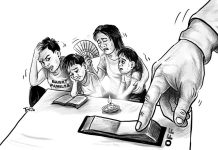
TODAY is World Food Day. It is an international call to action to address hunger and malnutrition. The primary focus of World Food Day is the fundamental concept of food and adequate nutrition as a basic human right. In the Philippines, the health organization Council for Health and Development, the national secretariat of more than 70 community-based health programs in the Philippines, asserts that food and proper nutrition are inviolable and an integral part of basic human rights that everyone, regardless of social and economic status, is entitled to.
Due to extreme poverty and low income levels, especially among peasants in the countryside which comprise the bulk of the population, some 2.2 million Filipino families are currently suffering from food scarcity and malnutrition, in the latest Social Weather Stations survey. Food security among the poor peasants in the countryside is perpetually weakened, due to restrictive trade policies, low farm productivity and income.
Come to think of it. The small and disenfranchised farmers have barely enough to feed themselves and their families. If the farmers themselves, the producers of food for the national population, have nothing to eat, then it is no surprise that the country is suffering from a nationwide food and malnutrition crisis.
According to the Food and Nutrition Research Institute (2016), malnutrition prevalence in the country is ever worsening. Stunting rates were 30.3 percent and 33.4 percent in 2013 and 2015, respectively. Chronic malnutrition among children ages 0-2 years old is at 26.2 percent — the highest it has been in over a decade.
Furthermore, a recent survey conducted by Ibon Foundation (2016) found that over 70 percent of Filipinos consider themselves as poor. The diet of most urban poor Filipinos consists of instant noodles, dried fish, and copious amounts of white rice. The rural population’s diet is comprised of cornmeal and local agricultural produce; the peasants in the countryside rarely eat meat.
One of the most effective and efficient solution to the current food crisis is genuine land reform to strategically address the peasants’ age-old cry for land, and providing them with the means to make their land productive and achieve national food security. Also, shifting from conservative, traditional, large-scale industrial methods of chemical farming to organic farming managed by small farmer-worker owned farm and market cooperatives will effectively improve the worsening food and malnutrition crisis.
[/av_textblock]
[/av_one_full]