


BACOLODNONS are having a field day debating and dissecting a term that has suddenly become the talk of the town: “fraud audit.”
On social media, Bacolodnons have been displaying their remarkable ingenuity in describing what the term means — or what they think it means.
Some liken a fraud audit to a “ghost” — something that apparently sends shivers down the spines of certain city officials.
Others describe it as a bitter pill to swallow amid the raging loan controversy in the City of Smiles.
But perhaps the most savage comparison is that of a rabid dog — something feared because it might bite anyone who gets too close.
Amusing comparisons, indeed!
But beyond the jokes, sarcasm, and political insinuations, what exactly is a fraud audit? And why has this seemingly technical accounting term suddenly become a household expression in Bacolod?
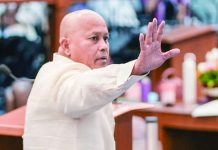
To recall, a fraud audit was at the heart of a proposed resolution filed by Councilor Homer Bais, which the City Council majority — composed of his own colleagues from Team Asenso — voted down during its October 24 session.
Bais, of course, was the same councilor involved in the highly publicized October 16 confrontation with his political boss, Cong. Albee Benitez, at the Bacolod City Government Center (BCGC).
Following the heated confrontation, public attention shifted to the P4.1-billion loan of the city government, and particularly over the unfinished P765-million legislative building.
Bais filed a resolution urging the Commission on Audit (COA) to conduct a fraud audit. His objective? Transparency.
But Bais never got the chance to see his proposal advance. It was shot down — not by political opponents but by his very own colleagues and teammates in Benitez’s Team Asenso.
‘I KNEW IT, I EXPECTED THAT…’
Interestingly, Bais admitted that even before he finished drafting his proposed resolution, he already had a pretty good idea of its fate.
“I knew it. I expected that it would be rejected. But I just went on because I believed that it was the best thing to do,” the councilor stressed.
And despite the rejection, he remains unapologetic. No regrets. No retreat.
But why insist on a fraud audit? And what makes the term seemingly so unsettling to some of his colleagues?
Councilor Caesar Distrito argued that it was premature to conclude that fraud had occurred in the ongoing P765-million legislative building project.
Councilor Al Victor Espino, meanwhile, defended his vote against the resolution, insisting that the proposal itself was flawed.
Bais, however, had a rather intriguing response. With a smile, he simply declared: “Because I know everything.”
What exactly does Homer know that his colleagues — and perhaps the public — do not?
OPEN DEBATE
According to COA, a fraud audit is a specialized examination of government transactions, programs, or collections conducted when there are strong indications, complaints, or reports of alleged fraud, alleged corruption, or alleged misuse of public funds and properties.
In simpler terms, it is an investigative tool intended to determine whether public resources have been misused or whether irregularities warrant further action.
Bais’ proposed resolution could have opened the door to a more thorough examination of the controversial legislative building project and, ultimately, a clearer public understanding of how taxpayers’ money was spent.
So, what exactly made the proposal flawed?
For many netizens, Espino’s explanation appears unconvincing.
And what about Distrito’s argument that it was premature to conclude that fraud had occurred?
Critics have questioned that reasoning, pointing out that an audit is supposed to establish facts — not merely confirm conclusions already reached.
After all, requesting an investigation is not the same as declaring someone guilty. Isn’t that the whole point of an audit?
‘YADA, YADA, YADA’
Now, a question for the city councilors: Why does the prospect of a fraud audit appear to cause so much discomfort?
What many Bacolodnons want is straightforward: Let the fraud audit proceed. Nothing more. Nothing less.
And if everything is aboveboard, why not welcome an independent examination?
PUBLIC CURIOSITY
The P4.1-billion loan, and particularly the unfinished projects associated with it, has awakened public curiosity across the social spectrum. Rich or poor, businessman or ordinary wage earner, people are asking essentially the same question: What exactly has Bacolod gained from these?
Bacolodnons are not merely hungry for reassuring statements. They want answers. They want transparency. And above all, they want to know whether the billions borrowed in their city’s name have been spent wisely and properly.
Bacolod officials must find a credible way to address these concerns, or risk remaining trapped in a political kitchen where the heat keeps rising and the exit becomes increasingly difficult to find. And no amount of political seasoning can save a dish that the public has already begun to distrust.
To borrow a famous observation often attributed to Groucho Marx: “Politics is the art of looking for trouble, finding it everywhere, diagnosing it incorrectly and applying the wrong remedies.”
In Bacolod’s case, perhaps the remedy is not another political explanation. Perhaps it is simply an audit.
And perhaps the real question is no longer what a fraud audit means — but why allowing one to proceed has become such a political headache./PN