
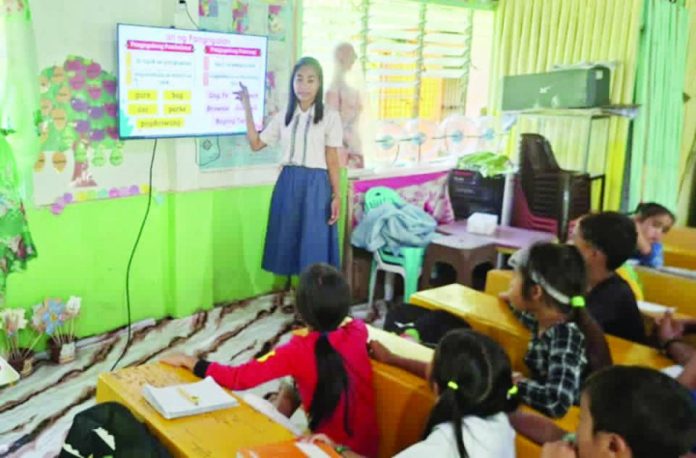
ILOILO — Every school day, Lowie Ann Lavilla Castor makes an hour-long journey to Aglonok Primary School, tucked in one of the remotest barangays of Calinog, Iloilo.
There, she teaches Grade 4 Indigenous Peoples (IP) learners as a local school board teacher.
The difficult trek does not discourage her. It is familiar ground for the 27-year-old Panay Bukidnon woman who once walked the same distance to school — sometimes barefoot, hungry and carrying little more than a determination to lift her family out of poverty.
Castor, a resident of Barangay Cahigon, Calinog, is the eldest of five children of Nina Analie and Rowie, both members of the Panay Bukidnon Indigenous Cultural Community.
For children born into poverty, reaching their dreams is already an enormous struggle. For Indigenous children, the challenge can be even greater as they navigate economic deprivation, geographic isolation and the circumstances surrounding their culture and way of life.
Castor endured all of these — and prevailed.
Lessons born from hardship
Her parents worked as upland farmers, laboring relentlessly to place food on the table and send their children to school. But their earnings were rarely enough.
Even as Castor excelled academically — graduating with honors from Binolusan Pequeño Elementary School and later completing her secondary education at Binolusan Pequeño National High School — poverty followed her into the classroom.
“Nakita ko kun paano nagpangabudlay kag antos ang akon pamilya. Todo kayod sa pag-obra sa bukid para mahatag sa amon ang amon kinahanglanon. Pero indi ini man gihapon ini makaigu. Na-agyan ko nga mag-eskwela nga wala sang tsinelas, wala sang unod ang tyan kag kun kis-a ang balon ko kan-un lang nga may mais nga giniling. Mas masakit pa kay kis-a ang balon ko mais lang nga giniling,” Castor told Panay News.
She still remembers one painful evening when she overheard her parents worrying about where their family’s next meal would come from. At times, they had to borrow rice from neighbors simply so the children would have something to eat.
Instead of crushing her ambition, those experiences gave it urgency.
“Ang amon kapigaduhon sa kabuhi ang nagtulod sa akon nga maghimakas kag mag-pursige sa pagtuon para malab-ot ko ang akon handum. Bisan malayo ang eskwelahan, indi sia nangin problema sa akon. Nagalakat kami sang akon mga utod sang isa ka oras para makakadto sa eskwelahan,” added Castor.
Before going to class, she would stop at her aunt’s store and sell native delicacies to earn money for her school allowance.
She finished high school without ever owning a new school uniform. The uniforms she wore had been handed down by relatives.
Yet, no distance seemed too far when measured against the future she imagined for her family.
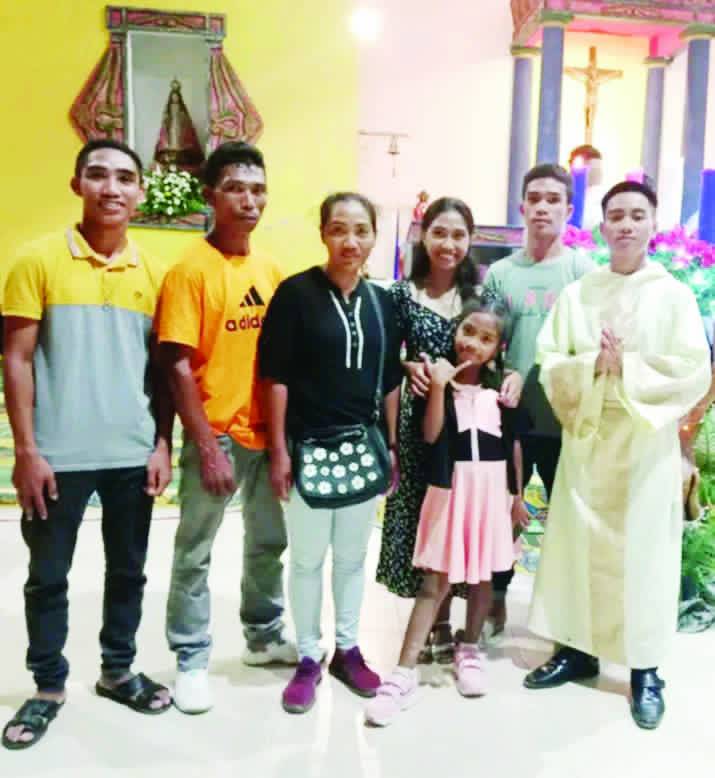
“Ano man kalayo sang akon ginalakat kada adlaw, indi ini sia sablag para sa akon mataas nga handum para sa akon pamilya. Ginabutang ko gid sa paminsaron ko nga one day, mabangon ko gid sa kapigaduhon ang akon pamilya paagi sa akon paghimakas kag pagtuon,” Castor told Panay News.
Nearly giving up
When Castor entered college, her parents stretched their meager resources so she could pursue a Bachelor of Elementary Education, major in General Education, at West Visayas State University – Lambunao Campus.
She survived her first year despite the family’s financial difficulties. By her second year, however, the burden had become so heavy that she considered abandoning her studies and finding work to help her parents.
Her mother refused to let poverty end her education.
Determined to see her daughter earn a degree, she repeatedly borrowed money from acquaintances — and sometimes from anyone willing to help — just to provide Castor’s allowance.
“Kun kaisa, mabatian ko sa istorya sang iban nga mga tawo nga nagapangutang na si Nanay. Masakit man para kanakon kag daw ginakusi man akon dughan pero bal-an ko man nga para ina sa akon ang ginahimu nanda,” said Castor.
That realization pushed her to search for financial assistance. Her breakthrough came when she qualified for the Iloilo provincial government’s Provincial Educational Assistance Program for IPs, administered through the Provincial Social Welfare and Development Office.
The scholarship became a bridge between hardship and hope. It enabled Castor to finish college and eventually pass the licensure examination to become a Licensed Professional Teacher.
“Nagapasalamat gid ko sa Dios kag sa mga tawo nga nagsalig kag nagsuporta sa akon. Tungod sang inyo kaayo, naka-graduate ako,” she said.
Returning to light the way
Castor could have viewed education solely as her personal escape from poverty. Instead, she returned to a community where Indigenous children confront many of the same barriers she once faced.
Inside her Grade 4 classroom at Aglonok Primary School, she is more than a teacher. She is living proof that hunger, isolation and poverty need not dictate how an Indigenous child’s story ends.
She understands when pupils arrive tired from walking. She understands when a child has little food or no money for school needs. Most importantly, she understands the dreams that survive beneath those hardships.
“Sa akun nga kasubong nga IPs, lab-uton naton ang aton handum. Indi mag-surrender sa challenge sang kabuhi. Gamiton naton ang edukasyon para mabangon ang aton pamilya. Kita ang pruweba nga kun mapisan lamang, may determinasyon, kag may suporta halin sa pamilya, wala sang imposible kag wala sang handum nga indi malab-ot,” said Castor.
Castor now hopes to secure a permanent position in the public school system. Such an opportunity, she believes, would allow her to serve more Indigenous learners while providing greater support for her family and helping her younger siblings finish their education.
Two of her siblings have completed senior high school. She is also supporting a younger sibling who is a fourth-year Criminal Justice Education student at WVSU-Lambunao Campus.
The International Day of the World’s Indigenous Peoples was observed last August 9. Castor’s journey embodies what meaningful support for Indigenous communities can accomplish.
Her life changed because her parents refused to surrender, because a scholarship opened a door and because she chose to keep walking — even when the road was long and she had no slippers on her feet or food in her stomach.
Today, she walks another difficult road toward Aglonok Primary School. But she no longer walks only for herself.
She walks so another Indigenous child may see that beyond the mountains, hardship and hunger, a different future is possible./PN