

ILOILO City – Barely weeks after enacting its landmark Coastal Greenbelt Zone Ordinance, the Iloilo City Government is already moving to strengthen it through science-based amendments that would transform it from a mangrove-centered measure into a comprehensive ecosystem-driven coastal protection policy.
The proposed revisions, crafted after consultations with coastal ecology experts, seek to ensure that restoration efforts are guided by scientific principles rather than a one-size-fits-all approach, while expanding protection to a wider range of coastal ecosystems vulnerable to climate change and environmental degradation.
Councilor Romel Duron, chairperson of the Sangguniang Panlungsod committee on environment and principal author of Regulation Ordinance No. 2026-0189, said the amendments are intended to align the city’s pioneering greenbelt policy with current scientific standards in coastal restoration and climate adaptation.
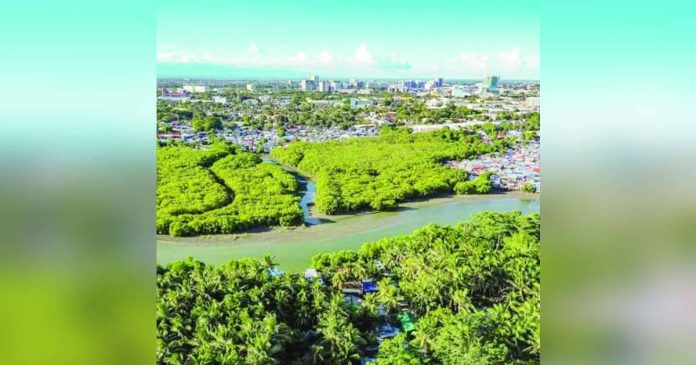
Approved by the City Council on July 1 and signed by Mayor Raisa Treñas on July 7, the ordinance established a mandatory 100-meter Coastal Greenbelt Zone to protect around 110 hectares of mangrove forests while reducing coastal hazards and strengthening climate resilience.
Under the proposed amendments, the ordinance would recognize the interconnected nature of coastal ecosystems by expanding protection beyond mangroves to include beach forests, strand vegetation, estuarine forests, riparian vegetation, coastal wetlands, dune vegetation, and native urban coastal forests, depending on the characteristics of each shoreline.
The revisions also adopt the principle of “Right Ecosystem, Right Place,” requiring restoration projects to use vegetation naturally suited to specific coastal habitats instead of applying uniform planting methods.
Among the key proposals are mandatory ecological assessments before planting, the exclusive use of native species, prohibition of invasive plants, ecosystem mapping, biodiversity inventories, shoreline monitoring, and climate resilience evaluations as part of the city’s Coastal Greenbelt Management Plan.
The amendments likewise seek tougher environmental safeguards by expanding prohibited acts to include the destruction of beach forests, wetlands and other native coastal habitats, illegal reclamation, waste dumping, sand and coral extraction, and the introduction of invasive species.
They also propose a graduated penalty system, mandatory ecological restoration at the violator’s expense, environmental compensation measures, and a “No Net Loss” policy requiring developers to restore or replace any unavoidable loss of native coastal ecosystems.
To ensure long-term scientific oversight, the proposal calls for the creation of a Scientific Advisory Panel composed of experts in coastal ecology, marine biology, botany, forestry, restoration ecology and climate adaptation, while encouraging research partnerships with institutions such as the University of the Philippines Visayas and requiring periodic reviews of the ordinance every five years.
Duron said the city is also studying the possible expansion of the ordinance’s coverage to other coastal areas, including Villa Beach.
“This is ongoing. We can expand. Initially, we are focusing only on the identified areas, but we are not limiting ourselves to those,” Duron said.
He stressed that any future expansion would be based on scientific evidence.
“As of now, Villa Beach is not included because we are still focusing on mangrove protection. We are studying the possibility, which is why we may amend the ordinance if we decide to include that area,” he said.
“If we plant mangroves, they must be in the proper habitat, and that area is not suitable because it is sandy. That is why our approach is scientific. If it is a beach, we can develop it, but behind it there are beach forests that also need protection.”
Duron emphasized that environmental laws must evolve to respond to changing conditions and priorities.
“There is no such thing as a permanent law. Laws can be amended to suit the needs of the time. Law should be dynamic. As we see it now, it is a matter of prioritizing. What should we prioritize — development, progress or protection? For now, we choose protection. If there are investments, we will weigh them,” he said./PN