


TRY BUYING lunch with ₱22.
Not cooking for a whole family. Just feeding yourself. Perhaps rice and a little ulam. If you are lucky, an egg. If you are buying from a carinderia, you might find yourself checking the prices twice before ordering.
That was my first thought when I read political analyst Malou Tiquia’s Facebook post about the food-poverty threshold. Her arithmetic was simple enough: ₱22 per meal, three meals a day, or ₱66. Subtract that from the cited daily poverty threshold of roughly ₱96, and you have ₱30 left.
Thirty pesos. For everything else.
Tiquia’s sarcasm was hard to miss. Yet some readers apparently took her remarks as an endorsement of the amount. Others challenged her to prepare a decent meal for ₱22. The comments became heated, which is hardly surprising when people are already struggling with grocery bills.
There is, however, an important distinction worth making. The ₱22 figure is derived from a statistical food-poverty threshold. It is not an official recommendation that Filipinos limit themselves to that amount for each meal. The Philippine Statistics Authority uses food and poverty thresholds to measure minimum needs and estimate poverty incidence.
That clarification matters. But it does not make the question go away.
What can ₱22 actually buy?
A person cooking at home might stretch the amount further by buying ingredients in bulk and dividing them across several meals. But buying in bulk requires money upfront. For someone purchasing food one meal at a time, the calculation changes considerably.
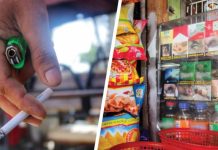
I wrote about something similar in my November 14 column, Poverty Comes in Small Packages. At a sari-sari store, people buy shampoo, detergent, coffee, and cooking oil in tiny quantities because that is what today’s money allows. The bigger package may be cheaper per gram, but knowing that does not magically put another hundred pesos in someone’s pocket.
Food works much the same way.
A family may know that buying a whole chicken is more economical than buying a few pieces. That knowledge is of little help when the money available must also cover rice, transportation, school expenses, and tomorrow’s breakfast.
Then there is the matter of nutrition. Filling a stomach is one thing. Providing enough protein, vegetables, and other nutrients is another. An inexpensive meal may get someone through the afternoon without necessarily meeting the nutritional needs that matter over time, particularly for growing children.
A student who skips breakfast may still show up for class, take notes, and answer questions. That does not mean hunger has stopped bothering him.
This is where poverty measurements become difficult to explain to ordinary people. Economists need thresholds. Government agencies need consistent definitions to compare conditions across places and years. Without such measurements, it would be harder to determine whether poverty is increasing or declining.
I would not dismiss that work. Measuring poverty is complicated, and the people doing it are not necessarily indifferent to those experiencing it.
Still, a statistical boundary can create an uncomfortable impression. A person whose income rises just above the poverty threshold may be classified as nonpoor, although the family budget remains painfully tight. The classification changes. The bills do not.
We encountered a similar argument in December 2025, when the proposed ₱500 Noche Buena budget drew widespread criticism. I wrote then about the distance between a technically possible grocery list and what families actually encounter in stores.
Filipinos are remarkably good at stretching money. We substitute ingredients, buy smaller portions, postpone purchases, and make yesterday’s leftovers last another meal. Sometimes we even laugh about it.
But resourcefulness has limits.
The controversy also comes amid wider concerns about the economy. In a November 12 statement, Partido Manggagawa questioned the government’s proposed ₱22.9-billion ASEAN hosting expenditure while drawing attention to the ₱22-per-meal figure and slowing economic growth.
Of course, an ASEAN summit and a family meal are very different expenses. Both deserve a fair accounting. Still, I understand why people make the comparison. When families are counting coins, large public expenditures naturally invite questions about priorities.
Perhaps what troubles people most is the language surrounding poverty. To be classified as nonpoor sounds reassuring. It suggests that some important difficulty has been overcome. Yet a household can cross that statistical line and remain one illness, missed paycheck, or unexpected school expense away from serious trouble.
I would be interested in seeing the food threshold explained through actual sample menus, regional market prices, and nutritional requirements. Not because economists have to defend themselves against every sarcastic social media comment, but because the public deserves to understand what the figures measure and what they leave out.
As for the ₱30 supposedly left after three meals, it is worth remembering what that amount represents in the arithmetic. It is not a spare allowance waiting to be spent on little comforts. It sits against the many other necessities that make ordinary life possible.
The numbers may help determine where the poverty line falls. They cannot tell us how much worry remains in a household just above it.
Thirty pesos left. The day is not over.
***
Doc H fondly describes himself as a “student of and for life” who, like many others, aspires to a life-giving and why-driven world grounded in social justice and the pursuit of happiness. His views do not necessarily reflect those of the institutions he is employed or connected with./PN