

ILOILO City — The fight against measles and rubella in Western Visayas is far from over as health authorities move to catch-up and routine vaccination to reach children who remain unprotected following the regionwide 2026 supplemental immunization campaign.
The Department of Health (DOH) Region 6 said health offices across the region will sustain immunization efforts after the Measles-Rubella Supplemental Immunization Activity (MR-SIA), which recorded an overall 62 percent coverage.
The post-campaign strategy will focus on sustained routine immunization, catch-up vaccination for children who were unavailable or sick during the MR-SIA, school-based immunization and active disease surveillance.
DOH-6 said the continuing measures are crucial to closing remaining immunity gaps, curbing virus transmission and protecting children from measles and rubella.
At the same time, the agency credited healthcare workers, local government units, medical societies, media partners, communities and parents for driving the vaccination campaign across Western Visayas.
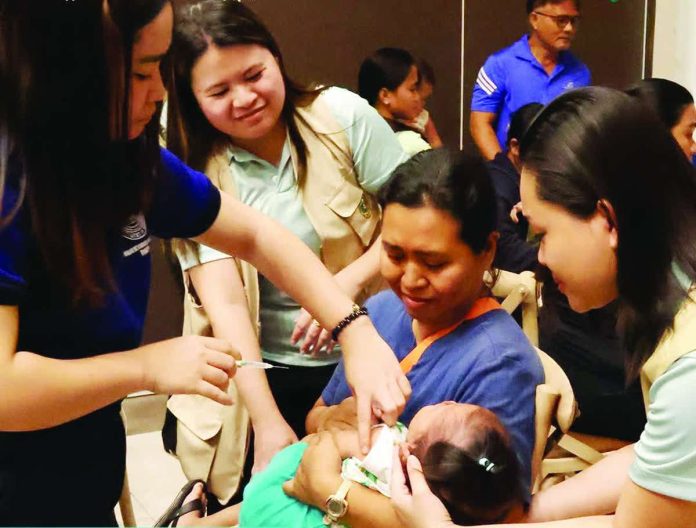
“At the heart of this effort were our health workers and vaccination teams, who brought immunization services closer to families through fixed vaccination posts, community-based activities, and house-to-house strategies,” DOH-6 stated.
“Beyond administering vaccines, they identified and followed up missed children, addressed parents’ questions and concerns, and continued reaching communities despite operational and geographic challenges,” it added.
Vaccination teams used fixed health facility posts, temporary community-based centers and intensive house-to-house operations to reach eligible children, including those living in hard-to-reach rural, coastal and urban communities.
Front-line nurses and barangay health workers also engaged families to answer questions, address vaccine safety concerns and counter misinformation and vaccine hesitancy.
DOH-6 likewise cited the role of provincial governors, city and municipal officials, health officers and barangay leaders in mobilizing resources, coordinating logistics and encouraging families to have their children vaccinated.
The campaign used real-time dashboards to monitor daily vaccination coverage and identify areas where additional teams were needed.
Rapid Convenience Monitoring was also employed to identify unreached children, while strict cold-chain management was maintained to preserve vaccine quality throughout island and inland delivery routes.
Civil society groups, media organizations and the Philippine Pediatric Society-Western Visayas Chapter also participated in the campaign.
The DOH particularly recognized parents, guardians and caregivers who brought eligible children to vaccination sites, stressing that their trust and participation remain critical to achieving community-wide protection.
As the MR-SIA transitions into post-campaign operations, health authorities said regular infant immunization services will be strengthened while children missed during the campaign will be targeted for catch-up doses.
Measles-rubella boosters will also be integrated into elementary school health activities, while disease surveillance will continue to allow health authorities to detect and respond quickly to possible cases.
“The gains of the 2026 MR-SIA reflect a collective effort across Western Visayas. Every child reached represents the work of health workers, families, communities, local governments, and partners united by one purpose–to ensure that no eligible child is left unprotected against measles and rubella,” the department said./PN