



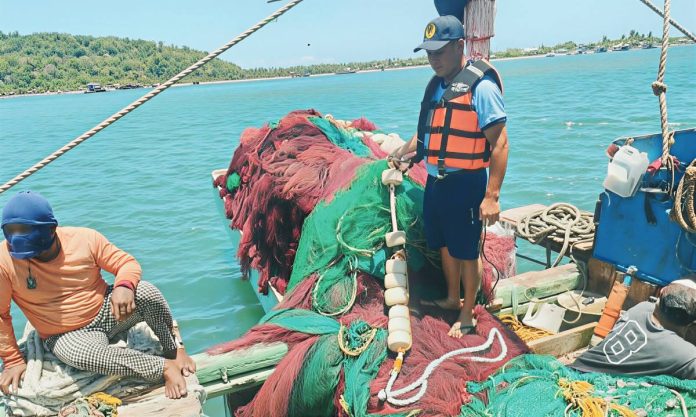
ILOILO — A crackdown on illegal fishing in Western Visayas is beginning to pay off, with authorities reporting a decline in illegal, unreported, and unregulated (IUU) fishing and municipal water encroachment in 2025 — gains that have translated into a significant surge in fish production across the region.
The Bureau of Fisheries and Aquatic Resources (BFAR) said intensified enforcement, closed-season policies, and the use of modern monitoring systems helped push municipal fisheries output to around 53,000 metric tons, signalling early success in efforts to restore marine resources.
The agency attributed the gains to tighter regulation of fishing activities, particularly the strict implementation of a closed fishing season to protect spawning periods, alongside stepped-up law enforcement operations.
Regional Director Remia Aparri emphasized that the progress is the result of coordinated efforts among government agencies and stakeholders.

“(But) while we have seen progress, declaring the region as IUU-free would be premature,” she noted, highlighting the complexities of the issue.
Despite the gains, BFAR acknowledged that illegal fishing remains a persistent threat in the region, with some operators resorting to deceptive tactics such as using fake permits or “front” operations to evade detection.
Encroachment into municipal waters also continues, particularly from fishers coming from neighboring areas like Cebu and Masbate in what is locally known as “pangayaw,” exploiting the region’s rich fishing grounds.
Authorities noted that for some violators, penalties are treated merely as a “cost of doing business,” especially when illegal methods like trawling yield larger catches.
To address these challenges, BFAR Region 6 is expanding its approach beyond enforcement by strengthening Information, Education, and Communication (IEC) campaigns and offering alternative livelihood programs for fishing communities.
“Our approach is evolving; it spans beyond strict enforcement to include education and positive community engagement,” Aparri explained.
“While we will take necessary actions against non-compliant operators, our focus is to foster understanding and support among fishers for sustainable practices,” she added.
As part of its intensified campaign, BFAR-6 has organized a 17-member regional interagency task force involving local government units, the Philippine Navy, and the Philippine Coast Guard to strengthen patrols and joint operations at sea.
The agency has also ramped up the use of the Vessel Monitoring System (VMS), a technology that tracks the real-time movement of commercial fishing vessels to detect illegal activities and prevent encroachment into municipal waters.
“The VMS is crucial in our mission; it enables us to verify whether vessels are operating within designated fishing zones, thereby safeguarding our marine resources,” Aparri emphasized.
BFAR-6 also continues to conduct strict inspections of fishery products, carriers, and port facilities to ensure compliance with national standards and to protect the integrity of the seafood supply chain.
While gains have been recorded, authorities stressed that sustained enforcement, stronger inter-agency coordination, and continued community engagement remain key to fully eradicating illegal fishing and securing the long-term sustainability of the region’s marine ecosystems./PN