

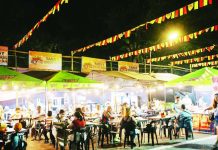

DUE TO THE coronavirus pandemic, the New Year celebration of Chinese Filipinos in Iloilo City today is muted – way, way different from celebrations these past 17 years. No grand parade. No colorful cultural show.
Mayor Jerry Treñas initiated the yearly Chinese New Year celebration in 2003 as a way of recognizing the significant contributions of the Chinese Filipino community to the city’s booming economy, and celebrating the cultural diversity of the Chinese Ilonggos.
The metropolis is home to some 13,000-strong Chinese Filipinos. There are a lot of active Chinese Filipino organizations in Iloilo. Among these are the Filipino-Chinese Chamber of Commerce of Iloilo, Inc., the Federation of Filipino Chinese Chamber of Commerce of Panay, Inc., and the Philippine-Chinese Chamber of Commerce and Industry, Panay Chapter, among others.
ORIGINS
When the Spaniards arrived in the Philippines, there was already a significant population of migrants from China due to the relationship between the barangays of the island of Luzon and the Ming dynasty.
In Manila, Chinese immigrants were herded to stay in the Chinese trading center called “Parian.”
After the Sangley Revolt of 1603 in Manila when the Chinese rebelled against Spanish authorities – but were crushed – Spanish authorities became wary. For fear of a similar Chinese uprising elsewhere, the Spanish authorities implementing the royal decree of Governor General Juan de Vargas dated July 17, 1679 rounded up the Chinese in other parts of the country.
In Iloilo, the Chinese were hamletted in its own version of the Parian (now Avanceña Street in Molo district).
Included in these hamletted Chinese were the progenitors of the Lacson, Sayson, Ditching, Layson, Ganzon, Sanson and other families who fled Southern China during the reign of the despotic Qing dynasty (1644–1912) in the 18th century. From Maynilad where they initially settled, they decided to sail farther south and landed at the port of Batiano River to settle permanently in Parian which was also near La Villa Rica de Arevalo.
Upon the encouragement of Spanish authorities, they married local “indio” women and became Catholics. Those who converted got baptized and their names Hispanized. There were incentives for conversion. Chinese Catholic mestizos were free to travel and live where they pleased. Starting as traders, they branched out into land leasing, moneylending and later, landholding. Many prospered.
As Chinese residency and trade restrictions were loosened, these immigrants began to compete with and displace the mestizo elite of Molo who previously controlled imports and exports from Panay Island.
SYMBOLS OF HERITAGE
Now, everywhere in Iloilo City are signs and symbols of its Chinese heritage.
There’s the Iloilo Chinese Temple located on Rizal Street.Its altar features Buddhist elements but some say it’s a blend of Buddhist and Taoist temples.
At the entrance is inscribed the year it was likely originally built – 1931.
Because of the Chinese’s considerable population in Iloilo City, it should not come as a surprise that the metro has a Chinese cemetery in Molo.
Among the remains buried in this cemetery were those of the members of the Board of Trustees of the Iloilo Chinese Commercial High School.
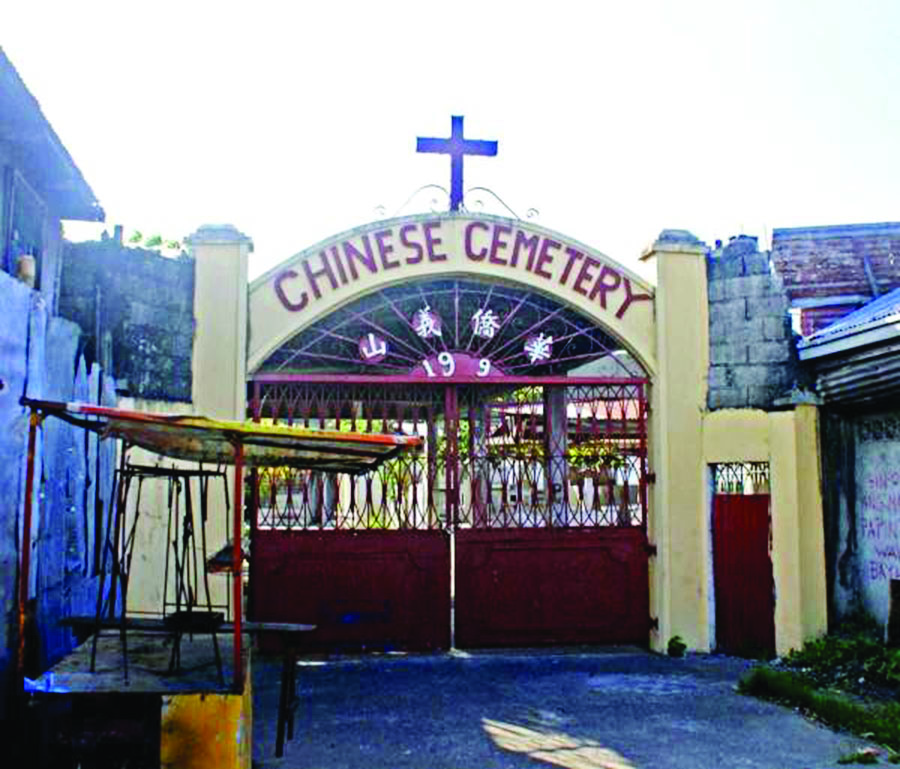
A snippet from the Wikipedia entry of Iloilo Chinese Commercial High School read: “Among those who stood against the Japanese were the school teachers and students who formed anti-Japanese Patriotic Groups. The group stirred the valor of the local Chinese through drama performances. Being the nucleus of the Anti-Japanese Forum, constituted principally by the local Chinese, school teachers frequently organized discussions on current events.
“When Japanese aggressors reached Iloilo, some of the Anti-Japanese organizers, including members of the Board of Trustees, ended up in jail. Their remains were buried in the Chinese Cemetery.”
Yes, the city has the Iloilo Chinese Commercial High School, which is now known as Hua Siong College of Iloilo. Founded by the Filipino Chinese Chamber of Commerce of Iloilo as a preparatory school in 1912, it is the first Chinese school outside Manila and second oldest in the Philippines.
The original name was Iloilo Chinese Vocational School and it was located at Yu Tiak Ha Building on Aldeguer Street.
There are many other schools in the city celebrating and promoting Chinese heritage such as the Sun Yat Sen High School, Iloilo Scholastic Academy, and even Ateneo de Iloilo.
And who in Iloilo does not know Lam Kong Botica on Iznart Street? It is one of the oldest, continually operating stores in the metro.
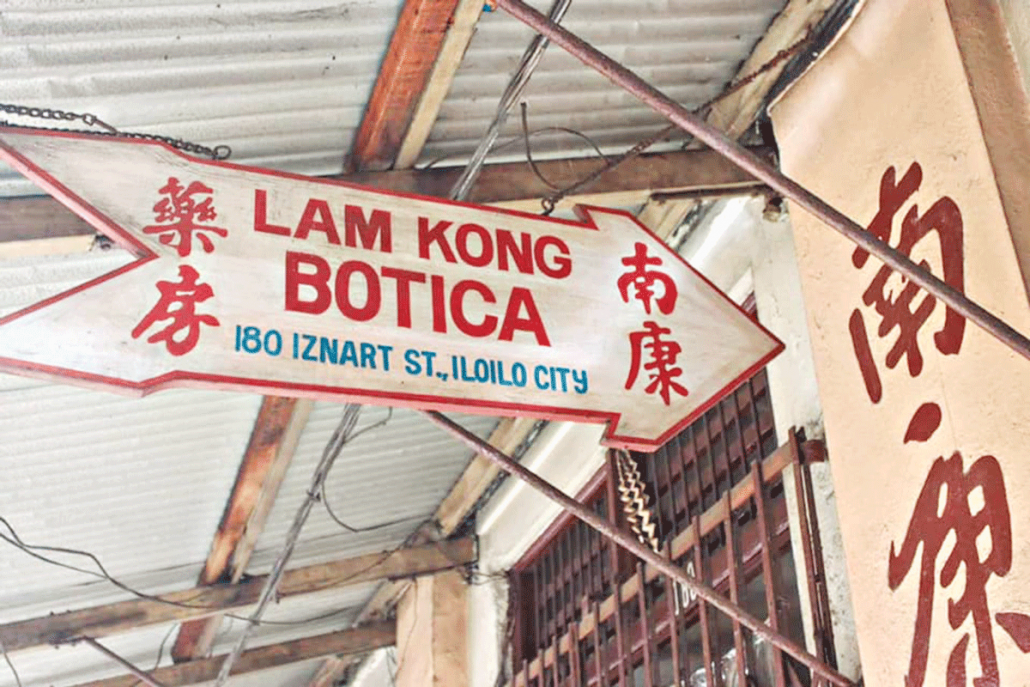
Popularly called Botica China, it offers authentic traditional Chinese medicines and products.
Another symbol is the Filipino-Chinese Friendship Arch on Iznart Street built by the Filipino-Chinese Chamber of Commerce of Iloilo. It pays tribute to the strong relationship between the city government and Chinese Ilonggo community.
Iznart Street was chosen as the fitting spot for the arch because it was where one would find most of the stores of Chinese Filipino retail businessmen.
Iznart Street is also the acknowledged Chinatown of Iloilo (collectively with J.M. Basa and Aldeguer streets), just like Ongpin Street in Manila. Every Chinese New Year, it is spruced up with authentic Chinese lanterns.
Mayor Jerry summed it up in his Facebook post: “Food, medicines and different merchandize – these are just a few of the things we grew up with. Our Chinese friends brought them to Iloilo because of early trade. They made a permanent imprint in the culture and history of the Ilonggos.”/PN