



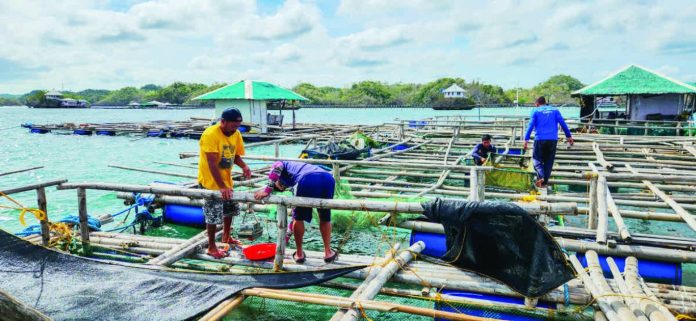
ILOILO City – An international aquaculture research center based in Tigbauan, Iloilo is moving to overhaul traditional spiny lobster farming in the Philippines, aiming to replace unregulated wild seed collection practices with science-driven production models that promise higher incomes for fishers while safeguarding marine ecosystems.
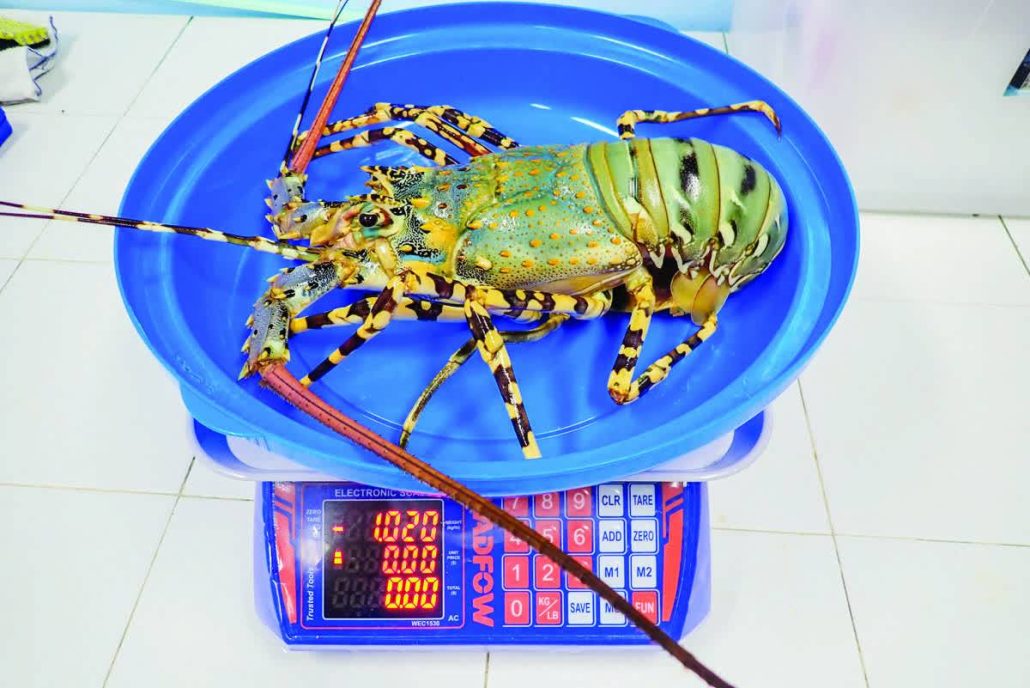
The Southeast Asian Fisheries Development Center Aquaculture Department (SEAFDEC/AQD) is leading the initiative to develop sustainable farming techniques for spiny lobster (Panulirus ornatus), locally known as “tiger lobster” or “banagan,” amid growing global demand and the availability of wild seed resources across the country.
SEAFDEC/AQD chief Dan Baliao acknowledged that the industry currently depends on collecting pueruli and juvenile lobsters from the wild, which are then transferred to small-scale nurseries and grow-out cages — a practice that poses long-term sustainability concerns.
“To leverage the potential of this high-value species, it is essential that we transform these informal practices into scientifically backed production models,” Baliao stated in a news release.
Baliao stressed the importance of establishing optimal stocking density, feeding schemes, and environmental management systems to ensure the sector’s long-term viability.
As part of the project, SEAFDEC/AQD identified Guimaras as a key research site due to its natural abundance of wild spiny lobster seeds. Researchers, led by Roselyn Baylon, are conducting environmental monitoring and verifying catch data through interviews with local fishers to better understand ecological conditions and promote community participation.
At the Igang Marine Station in Guimaras, experiments are underway to determine ideal stocking densities and feeding strategies for both nursery and grow-out stages using sea-based cage systems. The trials are evaluating growth performance, survival rates, and socioeconomic impacts on participating coastal communities.
“Through our rigorous research and experimentation, we are on the verge of establishing key growth benchmarks for the spiny lobster, which are vital for optimizing production cycles,” Baylon noted.
These benchmarks are expected to guide fishers in adopting best practices that enhance productivity without compromising marine health.
Dr. Leobert de la Peña, head of the SEAFDEC/AQD Research Division, said large-scale verification trials will follow once refined protocols are finalized, marking a significant step in integrating scientific approaches into traditional coastal aquaculture.
With global appetite for premium seafood on the rise, SEAFDEC/AQD officials said the initiative seeks not only to strengthen a high-value industry but also to empower coastal communities through sustainable and resilient aquaculture practices./PN