


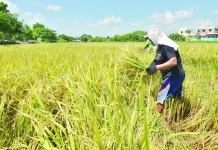

WHEN discussions about child labor arise, the focus naturally falls on the children. After all, they are the ones found working in farms, construction sites, factories, markets, and other places where they should not be. But if society truly wants to eliminate child labor, it must look beyond the children themselves and focus on the people who often hold the key to the solution: their parents.
Parents do not willingly sacrifice their children’s education and childhood if they have other means of survival. Most mothers and fathers would rather see their children in classrooms than in workplaces. Yet when income is insufficient, when jobs are scarce, when daily expenses exceed earnings, and when hunger becomes a constant threat, families are often forced into impossible choices.
The Department of Labor and Employment (DOLE) Region 6 recently reported that it has monitored 2,064 child laborers across the region, with Iloilo accounting for the highest number at 824, followed by Antique, Capiz, Guimaras, and Aklan. And poverty remains the primary driver of this. Children work because families struggle. This is why helping parents earn sustainable incomes may be one of the most effective child protection measures available.
A parent with a stable livelihood is less likely to depend on a child’s earnings. A family with sufficient income can keep children in school. A household with economic security can allow children to enjoy the childhood they deserve rather than burdening them with adult responsibilities.
Recognizing this reality, the Department of Labor and Employment – Region 6 has wisely expanded its response beyond merely identifying child laborers. It is connecting families to livelihood assistance, skills training, and government support services. Parents are being referred to training opportunities through the Technical Education and Skills Development Authority and other agencies. Livelihood programs are being developed to provide alternative sources of income. This approach deserves strong support because it attacks the root cause of the problem.
For decades, the government has often focused on rescue and enforcement. These efforts remain necessary, especially in cases involving hazardous and exploitative labor. However, rescue alone cannot provide a lasting solution. If the economic conditions that pushed children into labor remain unchanged, the cycle is likely to repeat itself.
What families need is not only intervention but empowerment. Local government units throughout Western Visayas should therefore prioritize livelihood development as part of their child protection strategies. This means expanding skills training programs, supporting small enterprises, improving access to capital for microentrepreneurs, strengthening agricultural productivity, and attracting investments that create stable employment opportunities.
National government agencies must likewise continue creating pathways toward decent work, especially in rural communities where poverty remains persistent. And the private sector also has a crucial role. Every decent job created for an adult potentially removes the need for a child to work. Every business that provides stable employment contributes not only to economic growth but also to child welfare. When parents have opportunities, children gain opportunities. When families become financially secure, children gain the freedom to study, play, and prepare for the future.
The fight against child labor cannot be won merely by taking children out of workplaces. It will be won when families no longer need to send them there in the first place. That is why investing in parents is ultimately an investment in children.
And if Western Visayas is serious about ending child labor, helping parents build sustainable livelihoods may be among the wisest investments it can make.