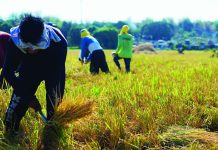



ILOILO – Deaths from leptospirosis in Iloilo Province have surged by 55 percent this year despite a slight decline in infections, raising alarm over the deadly disease that has now reached 41 of the province’s 43 local government units, with farmers emerging as the most vulnerable occupational group.
Leptospirosis is a bacterial infection transmitted through direct contact with the urine of infected animals, particularly rats, or through water and soil contaminated with infected animal urine.
The bacteria can enter the body through cuts and abrasions in the skin or through the mucous membranes of the eyes, nose and mouth.
Data from the Iloilo Provincial Health Office (IPHO) showed that 17 people died from leptospirosis between January 4 and October 10, 2026, compared to 11 deaths during the same period last year.
The number of infections, however, dropped by two percent, from 161 cases in 2025 to 158 this year.
The figures indicate a worsening death toll despite relatively stable infections, with the case fatality rate rising from 6.8 percent last year to 10.8 percent this year.
Early symptoms include high fever, severe headache, muscle pain, chills, red eyes, abdominal pain, jaundice, skin rashes and gastrointestinal problems.
Without prompt treatment, severe infections can cause kidney damage, liver failure and other life-threatening complications.
Agricultural activities accounted for the largest identified source of exposure, with 51 cases, or 32.3 percent of all infections, followed by flood-related exposure with 47 cases.
Another 28 cases involved unknown exposure, 25 were classified under other circumstances, and seven were linked to mud exposure.
The findings prompted provincial health authorities to intensify warnings to farmers and agricultural workers who regularly come into contact with potentially contaminated water and soil.
IPHO head Dr. Maria Socorro Colmenares-Quiñon urged farmers to wear protective boots when working in rice fields and other agricultural areas, particularly where stagnant water could be contaminated with urine from infected animals.
She also reminded residents exposed to floodwaters to seek medical advice.
“Mag pangayo sa aton RHUs (rural health units) sang prophylaxis para sa leptospirosis. Kon may pilas, again that is not anymore prophylaxis; kinahanglan na ang treatment,” Quiñon said.
She emphasized that individuals with open wounds who have been exposed to floodwaters or potentially contaminated agricultural areas should immediately consult a physician for proper assessment and treatment rather than rely on preventive medication.
41 areas record infections
The disease has spread across nearly the entire province, with only Estancia and San Rafael towns remaining free of reported cases as of October 10.
Passi City, Dumangas, Pototan and Santa Barbara recorded the highest number of infections at nine cases each.
Passi City reported one death, while Dumangas recorded two.
Dingle, Oton and Tigbauan followed with eight cases each. Dingle recorded two deaths, while Oton and Tigbauan reported one fatality each.
Janiuay and Maasin registered seven cases each, while Pavia and Tubungan recorded six cases apiece.
Barotac Nuevo and Zarraga each reported five cases and one death.
Dueñas recorded four infections but suffered two deaths, giving it one of the highest reported case fatality proportions among the affected municipalities.
Cabatuan and Leganes also registered four cases each.
Municipalities with three cases each were Anilao, Balasan, Barotac Viejo, Calinog, Leon, Mina, San Joaquin and Sara.
Among these, Barotac Viejo, San Joaquin and Sara recorded one death each.
Alimodian, Banate, Batad, Igbaras, Lambunao, Lemery, Miag-ao, San Dionisio and San Enrique each registered two cases.
Banate and San Dionisio recorded one fatality each.
Ajuy, Badiangan, Bingawan, Carles, Concepcion, Guimbal and San Miguel each registered one case.
Concepcion’s lone reported infection resulted in death.
Older residents most affected
Residents aged 40 and above accounted for the largest number of infections, with 78 cases, representing nearly half of the provincial total.
Those aged 20 to 29 recorded 33 cases, followed by the 30-to-39 age group with 25 cases.
Sixteen infections involved individuals aged 10 to 19, while six cases were recorded among children nine years old and below./PN