

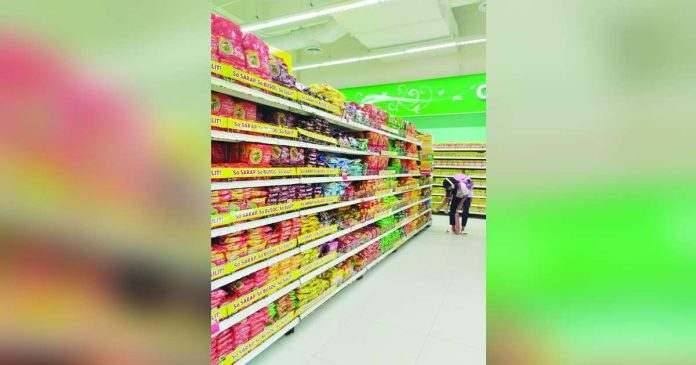
THE PALACE on Tuesday, October 28, clarified that its earlier announcement was not pertaining to an imposition of price freeze but only a strict monitoring of basic goods as ordered by President Ferdinand Marcos Jr.
Palace Press Officer Undersecretary Claire Castro said Marcos Jr. directed the Department of Trade and Industry (DTI) to closely coordinate with manufacturers to assure that basic and prime commodities would not increase in time for the holiday season.
“Pinag-utos ng Pangulo sa DTI na ipagpatuloy ang monitoring at ang ugnayan sa stakeholders and manufacturers not to make any price increase for prime and basic commodities especially during holiday season up to the end of the year,” Castro clarified in a text message to reporters on Tuesday.
Castro added that more manufacturers and stakeholders are cooperating.
“It is not price freeze,” she noted.
‘Undas’ monitoring
Prior to this, DTI Secretary Cristina Roque had already said on October 24, “there will be no price increase for basic necessities and prime commodities until the end of the year.”
She said industry players are cooperating “to give the consumers the price[s] that they deserve.”
“This is good news because everybody is working together to be able to give the best prices for the consumers,” she told reporters during the agency’s price and supply monitoring of flowers and candles in Manila, ahead of “Undas” or annual visits to cemeteries during All Saints’ Day, when these products are sold at exorbitant prices.
Voluntary
The DTI last updated the suggested retail price (SRP) bulletin on basic necessities and prime commodities in February this year, which showed that 77 out of a total of 191 commodities had varying price increases.
According to the Price Act (Republic Act No. 7581), agencies such as the DTI are mandated to issue SRPs to guide consumers as well as producers, manufacturers, traders, dealers, sellers, and retailers. They are not, however, required to adhere to the SRP since these are voluntary in nature.
Factors that DTI takes into consideration in imposing price ceilings include the average prices of basic goods in the last three months before the new SRPs are set and the available supply of these goods.
“If the prevailing price of any basic necessity is excessive or unreasonable, the implementing agency may recommend to the President the imposition of a price ceiling for the sale of the basic necessity at a price other than its prevailing price,” the law states. (ABS-CBN News / Philippine Daily Inquirer)