

ILOILO – While all 1,721 barangays in this province have formally established Materials Recovery Facilities (MRFs) as mandated by law, many of these facilities remain non-functional due to improper waste segregation practices, according to the Provincial Government Environment and Natural Resources Office (PGENRO).
Under Republic Act No. 9003, or the Ecological Solid Waste Management Act of 2000, every barangay or cluster of barangays is required to set up an MRF to receive mixed waste for segregation (biodegradable, nonbiodegradable, recyclable). The law also specifies clear guidelines on site selection, layout, and operational standards.
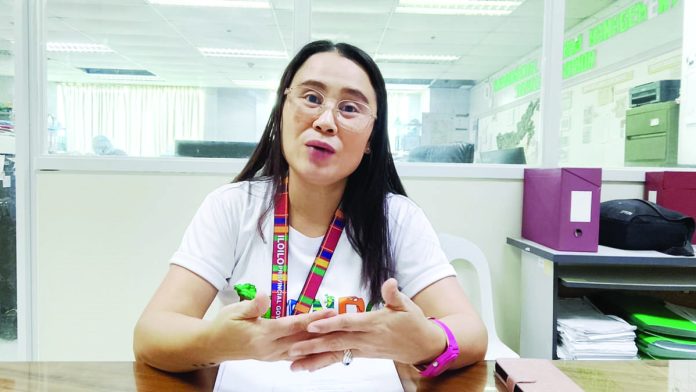
PGENRO senior environmental management specialist Mitzi Peñaflorida confirmed that Iloilo has achieved 100 percent compliance in terms of establishment.
“It is stated in RA 9003 that all barangays and even municipalities must establish their MRFs. So, 100 percent of our barangays already have one,” she said.
However, Peñaflorida admitted that compliance in form does not always equate to functionality.
“Based on our monitoring with barangay officials, some MRFs are not functional due to the lack of proper waste segregation,” she explained.
In many cases, biodegradable, recyclable, and residual wastes are all mixed together, defeating the purpose of the MRF, she revealed.
Peñaflorida emphasized that a barangay’s MRF can only be considered effective if it is used properly — that is, households must segregate their waste before disposal.
“An MRF should not just be for show. It should demonstrate proper segregation. Ideally, segregation starts at home, where recyclables like bottles, paper, and plastics are separated and sold directly, reducing the volume of waste that goes to the MRF,” she said.
To improve functionality, the PGENRO continues to assist barangays and municipalities in optimizing their facilities.
“We don’t just issue reminders; we go down to the ground to provide technical help in ensuring these MRFs work as intended,” Peñaflorida said.
Although no penalties have been imposed so far on non-compliant barangays, Peñaflorida hopes that within the year, all MRFs will be fully functional.
“We are not too strict in our enforcement, but if we are more hands-on and consistent, we can have a more successful implementation of solid waste management. The response of barangays has improved compared to before,” she noted.
Peñaflorida also highlighted that building a functional MRF need not be expensive.
“A simple structure using bamboo is already sufficient. What’s important is that there is a facility where households can bring segregated waste,” she added.
Households are also encouraged to maintain compost pits for biodegradable waste to further reduce MRF load.
She stressed that the purpose of MRFs goes beyond waste reduction.
“The MRF serves as a tool for raising awareness. It teaches residents about the importance of segregation and environmental responsibility,” she said.
Environment Month 2025 Activities
In celebration of Environment Month this June, PGENRO has lined up activities to raise awareness on waste management and sustainability.
“Our goal is to educate and inspire individuals to take action in protecting our planet and preserving its natural resources,” Peñaflorida said.
Activities include:
* June 2 – Province-wide “Limpyo Iloilo” and “Kada Lunes nga Lihok Kontra Lamok” in Oton
* June 5 – Province-wide Tanum Iloilo Part I
* June 9-13 – Province-wide Brigada Eskwela
* June 20 – Provincial Solid Waste Management Board Meeting
* June 23 – Ceremonial turnover of campaign waste materials for upcycling
* June 28 – Province-wide Tanum Iloilo Part II
Peñaflorida underscored the importance of consistent practice, not just seasonal awareness. “We hope that environmental consciousness becomes a daily habit, not just something we observe every June,” she said./PN