FROM a wider view, the connection becomes clearer. The country’s reliance on imported oil means that conflicts abroad — like the ongoing Iran War — are felt almost immediately at home. Fuel prices rise, and soon after, so do the costs of moving, eating, and running a livelihood. Everyone is affected, but not equally.
Policy options exist, but each comes with its own compromise. Some have begun to call for a serious review — or repeal — of the Oil Deregulation Law, alongside stricter oversight of what appears, to many, as cartelized pricing behavior among oil players.
Whether one agrees or not, these calls reflect a growing frustration with how prices are set and passed on. Despite the trumped-up, conflict-driven global fuel crisis, the ultimate question is how the burden should be shared. The drivers’ demands are simple and grounded. These are shaped by daily survival. Even a P5,000 one-time subsidy can be used up quickly when fuel alone takes most of it.
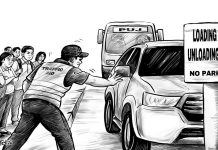
Protests are sometimes dismissed as “drama.” Sometimes they are. But more often, they are simply the last available tool of workers who feel unheard. A driver standing on the roadside with a placard is not performing ideology. He is translating his ledger into a message others can see. The anger, when it shows, is not manufactured. It is accumulated — from weeks of watching earnings shrink while expenses expand, from promises delayed or reversed, from the daily grind of making an honest living that no longer pays.
Even within the transport sector, disagreements exist. Some drivers choose to keep working, hoping to ride out the spike. Others join the strike, convinced that continuing to operate only deepens the loss. Both positions deserve respect. The difference lies in how each reads the same numbers. One sees a narrow path forward. The other sees a dead end. Neither is lazy. Neither is reckless. They are making different calculations under the same pressure.
For commuters who rely on daily travel, the situation feels immediate. Classes are affected. Attendance dips. Work slows down. Plans are adjusted. There is a temptation to ask why drivers cannot simply endure a little longer. The answer is already in that Sunday my conversation inside a taxi. Endurance has limits. If you drive for twelve hours and bring home P350, that is not just perseverance—it is already a warning sign. And when fuel climbs toward P120, the question naturally follows: “bakit pa ako bumibiyahe?” At that point, this is no longer just about drivers versus commuters. It becomes a shared strain. The same fuel price hits the jeepney, the vegetable delivery, the small neighborhood business, even the tricycle waiting outside your street.
What might help is to slow down and see things from where they sit. From the driver’s seat, where every decision starts with boundary, then fuel, then whatever is left for the family. To listen before offering solutions. Because policies built from lived experience tend to last longer than those written from a distance.
The strike will pass. It always does. The roads will fill again. But what matters is what remains after the noise fades. If nothing changes, the same story will repeat — only harder next time. If something shifts, even slightly, then the disruption would have meant something.
That Sunday, I paid my fare and said thank you. It felt small. Because gratitude does not buy fuel. But it reminded me: every ride carries a life we do not fully see. This protest is not about refusing to work. It is about asking that work still makes sense.
***
Doc H fondly describes himself as a “student of and for life” who, like many others, aspires to a life-giving and why-driven world grounded in social justice and the pursuit of happiness. His views do not necessarily reflect those of the institutions he is employed or connected with./PN