


THERE IS good reason to welcome every report that suggests fewer Western Visayans are living in poverty. Any decline in poverty incidence is an encouraging sign that economic recovery is taking hold. But statistics, no matter how carefully prepared, should never become a substitute for the daily realities faced by ordinary families.
The debate sparked by the government’s poverty threshold in Western Visayas deserves serious attention. While official figures classify a family of five earning at least P13,900 a month as no longer poor, many cannot help but ask: Is that amount truly enough to survive in today’s economy?
One does not have to be an economist to understand the dilemma. Every trip to the public market, every electric bill, every fare increase, every refill of an LPG tank, and every purchase of school supplies tells a story that cannot be ignored. Families do not live by statistical formulas; they live by actual prices.
Bagong Alyansang Makabayan (BAYAN) Panay argues that a family would need at least P22,595.05 monthly just to meet basic necessities, even before accounting for rent, healthcare, education, communication expenses, emergencies, clothing, or savings. Whether one agrees entirely with its computation is beside the point. The more important concern is that the gap between official poverty measurements and the actual cost of living appears far too wide to dismiss.
A poverty threshold serves as the basis for determining who qualifies for government assistance, social protection programs, subsidies, and policy interventions. If that benchmark understates the true cost of living, thousands of struggling families may be declared “not poor” on paper while continuing to skip meals, postpone medical treatment, borrow money for daily expenses, or sacrifice their children’s education just to make ends meet.
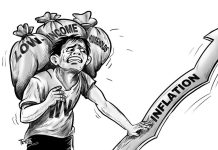
Economic growth is worth celebrating only if it translates into genuine improvements in people’s quality of life. Rising employment figures are encouraging, but employment alone does not guarantee financial security when wages struggle to keep pace with inflation and the rising cost of essential goods and services.
Government agencies must therefore remain open to reviewing how poverty is measured. The objective should not be to produce more favorable statistics but to produce more accurate ones. Policies built on unrealistic assumptions will inevitably produce inadequate solutions.
Ultimately, poverty cannot be measured solely by income. It must also be measured by whether families can eat nutritious meals three times a day, afford decent housing, keep their children in school, obtain medical care when needed, and save enough to withstand emergencies without falling deeper into debt.
True national progress is not found in statistical tables or percentage points, but in the confidence of parents that they can provide for their children, in workers who no longer have to choose between food and medicine, and in households that can finally live with dignity instead of merely surviving.
If the lived experience of Western Visayans tells a different story from the official numbers, then perhaps it is not the people who need to adjust their expectations — it is the statistics that deserve another look.