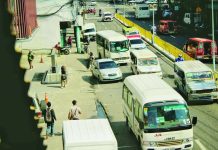



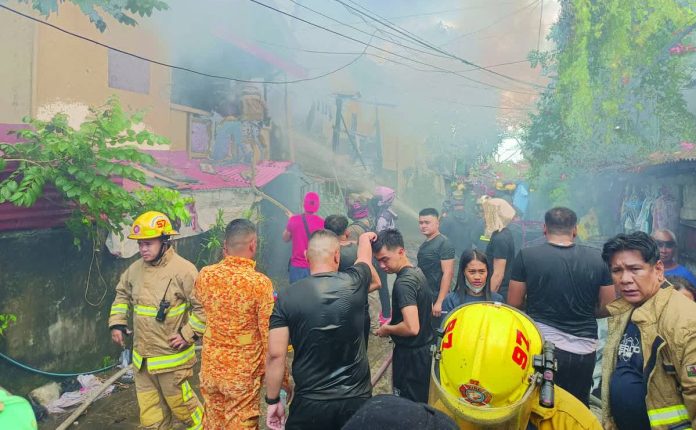
ILOILO City – Road obstructions, illegal parking, and dangling utility wires are slowing down fire trucks and ambulances in this city — a dangerous reality exposed during a major blaze on February 16 that left firefighters struggling to access the affected area, the Bureau of Fire Protection (BFP) warned.
The incident in Barangay Benedicto, Jaro district, which damaged 90 houses, once again underscored a recurring problem confronting emergency responders: narrow streets choked with vehicles, low-hanging cables, and roadside structures that delay life-saving operations.
Senior Fire Officer 1 Denmark Macoco, head of the Intelligence and Investigation Unit of BFP Iloilo City, said road obstructions remain one of the most common causes of delayed response.
“Emergency situations cannot be predicted, so we really need open and passable roads at all times,” Macoco said. “When fire trucks cannot immediately enter because of low cables, illegally parked vehicles, or narrow passages, the fire grows bigger and the risk to lives and property increases.”
With Fire Prevention Month approaching, the bureau intensified its call for community cooperation, stressing that fire safety is a shared responsibility.
“We are asking the public to help us by clearing obstructions in front of their houses and along barangay roads,” he said. “Even simple actions like not parking on narrow streets and reporting low-hanging wires can greatly improve our response time.”
Macoco emphasized that beyond physical obstacles, delayed reporting also hampers rescue operations.
“The key to immediate response is real-time reporting. People can call through telephone, cellphone, or radio communication. Not all areas in Iloilo City have personnel on standby, so the fastest way for us to respond is for the public to inform us right away if there is an incident,” he said.
He appealed to motorists — drivers of cars, motorcycles, and tricycles — to exercise responsibility when parking, especially at night when streets become more congested.
“We are not against vehicle owners, but we ask them to be responsible. Before parking, check if the area is passable. Fire trucks and ambulances are large vehicles. Especially at night, when more cars are parked along the streets, it becomes harder for emergency vehicles to pass,” Macoco said.
Barangay officials were also urged to take a more active role in regulating roadside parking.
“We are asking barangays to assist us in regulating parking along roads so that our fire trucks can pass during emergencies,” he said.
Another persistent hazard, according to Macoco, is the presence of low-hanging electrical, telephone, and closed circuit television cables along city roads.
“We are requesting barangays to coordinate with concerned agencies to clear unused or low-hanging wires. Our drivers cannot risk breaking these, especially if they are live or energized, because that will endanger our responders,” he said.
Macoco further pointed out that fences, tarpaulins, and even potted plants placed along streets — whether temporary or permanent — often become unexpected barriers during emergencies.
“These cannot be easily pushed aside or removed, and they contribute to the difficulty of accessing fire scenes,” he said.
The BFP Iloilo City reminded residents to keep the contact numbers of the nearest fire station and immediately report any fire or emergency.
“Our goal is to reach the scene as fast as possible,” Macoco said. “But we can only do that if the community works with us in keeping the roads clear.”/PN