
ORAL HEALTH remains a pressing yet often overlooked public health issue in the Philippines.
Despite improvements in general health care access, many Filipinos continue to face barriers to adequate dental care, resulting in widespread dental problems that affect both quality of life and overall health.
According to the 2019 National Oral Health Survey conducted by the Department of Health (DOH), nearly 90 percent of Filipino adults suffer from dental caries (tooth decay), while periodontal or gum disease affects approximately 80 percent of adults.
Children are not spared either; an alarming 70 percent of 5-year-olds were found to have cavities.
These statistics reflect a significant public health concern, emphasizing the need for comprehensive oral health strategies nationwide.
One of the main challenges is the uneven distribution of dental professionals. The Philippines has around 18,000 licensed dentists, most of whom are concentrated in urban centers such as Metro Manila, Cebu, and Davao.
In contrast, rural areas, particularly in Mindanao and the Visayas, often lack access to basic dental services. Residents of these regions may have to travel several hours to reach a clinic, discouraging routine dental visits and preventive care.
Cost also poses a major barrier. While government programs such as PhilHealth cover some dental services, coverage remains limited primarily to tooth extraction, minor procedures, and preventive check-ups.
Many families, especially those in low-income brackets, cannot afford routine dental care, leading to neglected oral health and the progression of preventable conditions.
Cultural factors also influence oral health habits. Traditional reliance on home remedies, such as chewing betel nut (nganga), can contribute to oral diseases including oral cancer and gum disease.
Meanwhile, awareness campaigns on proper brushing, flossing, and regular dental check-ups have yet to reach the full population effectively.
Despite these challenges, there are promising initiatives aimed at improving oral health.
The DOH has implemented the National Oral Health Program, which emphasizes school-based dental care, community fluoridation programs, and training for local health workers.
Private dental associations have also launched outreach programs in rural areas, providing free check-ups, tooth extractions, and oral hygiene education.
Innovations in tele-dentistry are beginning to bridge access gaps, allowing patients in remote communities to consult dentists virtually and receive guidance on preventive care.
Experts stress that a multi-pronged approach is essential. As it is, oral health cannot be separated from overall health. Dental care must be integrated into primary health services, and access to dental care should be expanded in underserved areas.
Improving oral health care in the Philippines requires addressing systemic inequalities, increasing funding, and fostering a culture of prevention.
While challenges remain, coordinated efforts by government agencies, private organizations, and local communities offer hope that Filipinos will one day enjoy better dental health and, by extension, improved overall well-being.
***
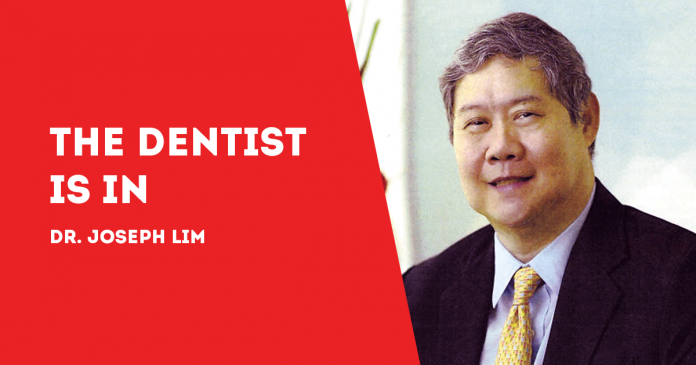
Dr. Joseph D. Lim, Ed. D., is the former Associate Dean of the College of Dentistry, University of the East; former Dean, College of Dentistry, National University; Past President and Honorary Fellow of the Asian Oral Implant Academy; Honorary Fellow of the Japan College of Oral Implantologists; Honorary Life Member of the Thai Association of Dental Implantology; and Founding Chairman of the Philippine College of Oral Implantologists. For questions on dental health, e-mail jdlim2008@gmail.com or text 0917-8591515.
***
Dr. Kenneth Lester Lim, BS-MMG, DDM, MSc-OI, graduated Doctor of Dental Medicine, University of the Philippines, College of Dentistry, Manila, 2011; Bachelor of Science in Marketing Management, De la Salle University, Manila, 2002; and Master of Science (MSc.) in Oral Implantology, Goethe University, Frankfurt, Germany, 2019. He is an Associate Professor; Fellow, International Congress of Oral Implantologists; and Fellow, Philippine College of Oral Implantologists. For questions on dental health, e-mail limdentalcenter@gmail.com./PN