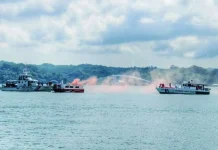




ILOILO City – Authorities in Western Visayas have seized more than P13.2 million worth of illegally caught fish and fishing paraphernalia as part of intensified maritime law enforcement ahead of the Visayan Sea closed season starting November 15.
The Regional Inter-Agency Task Force Against Illegal, Unreported, and Unregulated Fishing (RIATF-IUUF) reported that from January to September this year, 577 seaborne patrol operations led to the apprehension of 551 individuals, 218 fishing vessels, and the filing of 32 cases.
Another 432 land-based enforcement activities netted 4,039 kilograms of illegally caught fish and other gear.
The task force’s accomplishments were drawn from the consolidated efforts of the Philippine Coast Guard District Western Visayas, the Police Regional Office 6, the Regional Maritime Unit 6, and the Bureau of Fisheries and Aquatic Resources (BFAR) Region 6.
BFAR regional director Remia Aparri lauded the collaborative achievements of the task force and urged continued vigilance during the upcoming three-month ban.
“Let us continue to build on our achievements as a region and FMA (Fishery Management Area) of many firsts, recognized for its science-based management approach, strong enforcement coordination, and unwavering commitment to both ecological and social justice,” Aparri said.
The Visayan Sea Closed Season, implemented under Fisheries Administrative Order No. 167-3, prohibits the catching, selling, and marketing of sardines, herrings, and mackerel from November 15 to February 15 each year.
According to Maria Aimee Sobrevega, officer-in-charge of BFAR-6’s Fisheries Resource Management Section, the annual closure plays a critical role in ensuring the sustainability of marine resources.
“The annual closure lasting three months protects the spawning grounds of sardines, herrings, and mackerel, which are vital to the region’s ecosystem and the livelihoods of many coastal communities,” Sobrevega explained.
The Visayan Sea, shared by the provinces of Iloilo, Capiz, Negros Occidental, and Cebu, remains one of the country’s richest fishing grounds — and one of the most closely watched during the spawning season enforcement period./PN