



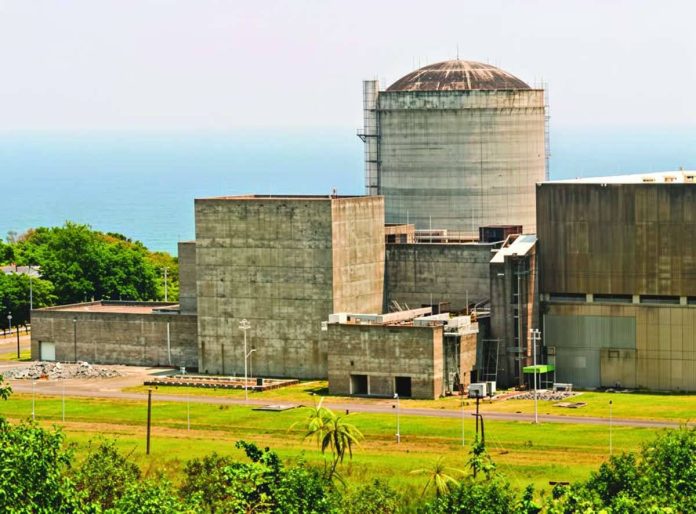
ILOILO City – Panay Island is emerging as a potential site for a nuclear power plant as the national government explores the technology to cut electricity costs and secure the country’s long-term energy supply.
During a nuclear energy forum here on July 29, a leading nuclear energy advocate, said Panay has the geographical and economic potential to host such a facility, which could generate investments, jobs and tax revenues while providing reliable baseload power.
The island must decide whether to host a nuclear plant or eventually purchase electricity from a facility constructed in Cebu or Negros, said Pangasinan 2nd District’s Cong. Mark Cojuangco.
“If Panay decides not to build one, Cebu will. If Cebu doesn’t, Negros will. Eventually, you’ll just end up buying electricity from them. The question is: do you want the economic benefits to stay here, or do you want them to go somewhere else? That’s your decision,” Cojuangco said.
He stressed that the host island would gain not only a stable electricity supply but also the economic activity generated by the construction and operation of the facility.
“It’s an economic gain. If it’s built in Negros, Negros will benefit. If it’s built in Panay, then Panay will benefit,” he said.
His remarks came days after President Ferdinand Marcos Jr., in his fifth State of the Nation Address, directed the government to revisit nuclear energy as part of efforts to reduce electricity prices and reinforce the country’s energy security.
LOWER POWER COSTS
Gayle Certeza, lead convenor of lobby group Alpas Pinas, said nuclear energy could help address the Philippines’ persistently high electricity rates, which have hampered industrial expansion and investment generation.
“The Philippines has one of the highest electricity rates in Asia. Affordable and reliable baseload power is necessary if we want industries to grow, attract investments, and create more jobs,” Certeza said.
She said a nuclear plant capable of generating about 620 megawatts would require only around 20 tons of fuel. On the other hand, a coal-fired plant would need approximately 2.5 million tons of coal to generate a similar amount of electricity over the same period.
Certeza said nuclear power produces large amounts of electricity from relatively small quantities of fuel while emitting minimal greenhouse gases compared with fossil fuels.
She also cited international data indicating that nuclear power has among the lowest recorded death rates per unit of electricity generated compared with coal, oil and natural gas.
SAFETY CONCERNS
Safety and environmental concerns, however, remain major issues in an archipelagic country frequently struck by earthquakes, typhoons and other natural hazards.
Environmental groups and some scientists have raised concerns over radioactive waste disposal, disaster preparedness, decommissioning costs and the selection of sites in hazard-prone areas.
Cojuangco maintained that nuclear facilities do not produce the same pollutants emitted by coal and other fossil fuel plants.
“When you burn coal, you create smoke, carbon dioxide, ash, and pollutants that go into the air, the ground, and even groundwater. Nuclear power is different because there is no combustion. The fuel remains contained inside the reactor. What you put in is essentially what you take out years later as spent fuel, and it remains contained,” he explained.
Asked whether nuclear energy poses negative environmental effects, Cojuangco replied, “In my opinion, there are no negative effects.”
Any nuclear project would nevertheless require extensive scientific studies and regulatory review to address issues involving radioactive waste, emergency preparedness and public safety.
POSSIBLE OPERATION BY 2033
Despite the government’s renewed interest, Cojuangco said the country remains several years away from generating electricity through nuclear power.
Even if the government immediately approves the construction of a new plant, he said commercial operations could begin only around 2033 — beyond Marcos’ current term.
Cojuangco also ruled out reopening the mothballed Bataan Nuclear Power Plant before 2028 because the facility would still need years of validation and commissioning, as well as approval from the Philippine Atomic Energy Regulatory Authority.
A proposed nuclear facility in Panay or elsewhere in the country must undergo feasibility studies, environmental impact assessments, public consultations and regulatory reviews. It must also comply with international nuclear safety standards before construction can begin./PN