
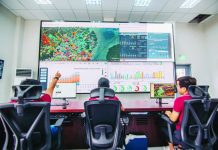



ILOILO City – The Office of Civil Defense (OCD) in Western Visayas has prepositioned emergency supplies across the region and ordered heightened monitoring of landslide-prone communities.
It urged local authorities to brace for months of heavy rains and possible typhoons following the onset of the southwest monsoon.
OCD Region 6 director Raul Fernandez said disaster response resources have already been strategically deployed in the provinces of Aklan, Antique, Capiz, Guimaras, and Iloilo to ensure immediate assistance to local government units (LGUs) that may be affected by floods, landslides, or tropical cyclones during the rainy season.
The government is taking no chances with landslide risks, stressed Fernandez, noting that monitoring systems have already been installed in vulnerable areas to detect ground movement and provide early warnings to concerned communities.
Dynaslope instruments installed by the Department of Science and Technology (DOST) and the Philippine Atmospheric, Geophysical and Astronomical Services Administration (PAGASA) are helping authorities identify potential landslide threats before disasters occur.
Fernandez stressed that human activities in hazard-prone areas, particularly landslide-prone communities, should no longer be allowed and that local governments must strictly enforce relocation measures where necessary.
The OCD is also intensifying its Information, Education, and Communication (IEC) campaign to encourage residents to take precautionary measures against disasters commonly associated with the rainy season.
Despite the threats posed by the weather, Fernandez expressed confidence that local governments in Western Visayas are prepared to respond effectively to emergencies.
“Local government units have trained responders, rescue personnel, and adequate equipment that can be mobilized immediately during calamities,” he added.
Fernandez also reminded local governments to regularly clear waterways, drainage systems, and canals to ensure the smooth flow of water and reduce the risk of flooding in roads and low-lying communities.
According to the OCD, local disaster risk reduction and management offices have continued strengthening monitoring efforts, upgrading equipment, and conducting training programs for search-and-rescue personnel as part of the region’s goal of achieving zero casualties during disasters.
Fernandez urged LGUs to ensure that emergency tools, equipment, and evacuation centers are ready for immediate use should severe weather conditions occur.
The Philippine Atmospheric Geophysical and Astronomical Services Administration officially declared the onset of the southwest monsoon, or habagat, on May 30.
The weather bureau said recent analyses showed the presence of southwesterly winds over the western section of the country, a weather pattern associated with the beginning of the rainy season.
“With the intrusion of westerly winds and the progression of the general meteorological pattern across the country, these developments suggest the start of the southwest monsoon (habagat), which is one of the precursors of the onset of the rainy season,” it stated.
The southwest monsoon may bring frequent rains and thunderstorms in the coming months.
PAGASA also projected that nine to 13 tropical cyclones could form within or enter the Philippine Area of Responsibility from June to November.
As of early June, the Philippines had already experienced four, including Tropical Storm Domeng, the latest weather disturbance to affect the country./PN