



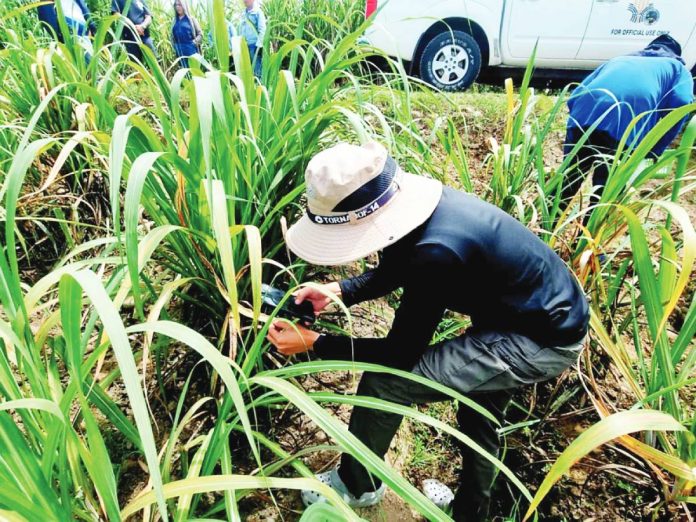
BACOLOD City – The Sugar Regulatory Administration (SRA) has intensified its collaboration with one of the country’s pioneering sugar mills to fight the red striped soft scale insect (RSSI) through an organic and eco-friendly pest management solution.
SRA administrator and chief executive officer Pablo Luis Azcona conducted a site visit in Silay City where the Hawaiian-Philippine Company (HPCo) is situated.
Azcona expressed support for HPCo’s initiative, which focuses on a biological control approach aimed at suppressing RSSI populations while safeguarding beneficial insects essential to the ecological balance of sugarcane farms.
“Through this partnership, we’re not just solving today’s pest problem — we’re laying the groundwork for sustainable farming practices that will benefit generations of sugarcane farmers in Negros and beyond,” said Azcona.
Since June, HPCo’s technical team has been working to develop an organic solution tailored to varying levels of infestation.
The project accelerated significantly following the August 10 to 16 visit of Israeli agricultural experts Yael Skutelsky and Nina Lehmann, who shared advanced biological pest control techniques, enabling HPCo to refine its treatment procedures and establish a systematic protocol involving assessment, spraying, and monitoring.
“Our protocol focuses on disrupting pest growth and suppressing reproduction, without harming beneficial insects,” said Rodeo Suating, HPCo Co-Gen head and regulatory compliance officer.
He added: “The aim is to lower the RSSI population to a threshold where natural predators can take over.”
HPCo said RSSI-affected farms in Silay City and E.B. Magalona town will receive the first round of the organic solution free of charge. Farmers will be responsible for implementing the protocol on the ground, including field assessments, spraying, and de-trashing.
RSSI infestations are commonly found on field perimeters, especially near roadsides, and can cause yellowing leaves, stunted growth, and shortened internodes — symptoms that appear as early as two to three months after planting, with infestations peaking from the fourth to tenth month of cane growth./PN