


ILOILO — As the Dinagyang Festival draws near, the provincial government has moved to reinforce basic health safeguards, urging Ilonggos to strictly observe the “3Ms” amid growing concern over flu-like illnesses linked to the so-called “super flu.”
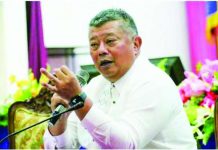
Gov. Arthur Defensor Jr. said the province will apply the preventive measures used during previous flu seasons – mag-hugas sang kamot (hand hygiene), mag-maskara kon gina-ubo kag ginasip-on (proper masking), kag mag-distansya kon madamo sang mga tawo, ilabi na kon nagamasakit (physical distancing).
These are the most practical defense during large public gatherings, Defensor said during a press conference on Thursday, January 8, when asked about the province’s preparations as the crowd-drawing Dinagyang Festival approaches.
Health authorities nationwide monitor reports of prolonged flu-like symptoms believed to be associated with Subclade K of Influenza A, a strain that infectious disease experts say may be contributing to the persistence of cases across the country.
Iloilo Provincial Health Office (IPHO) head Dr. Maria Socorro Colmenares-Quiñon clarified that, as of this week, no formal advisory has been issued by the Department of Health (DOH) Central Office regarding new protocols for the “super flu,” and no confirmed cases have been officially reported in Iloilo Province.
She noted, however, that studies show the strain is more common in colder countries and presents symptoms similar to influenza-like illness (ILI), prompting local health officials to push preventive practices.
“Ang pag-andam naton daw pareho lang man sa ordinary nga flu. It’s a kind of flu, ang pag-andam back to basic kita,” Quiñon said.
Quiñon added that ILI cases in the province have not spiked in recent weeks, although reports of patients experiencing prolonged fever, cough, headache, and body pains have been monitored.
She said the IPHO is still awaiting guidance on the possible release of a vaccine specifically targeting Subclade K.
Infectious disease specialist Dr. Rontgene Solante earlier warned that the wave of flu-like illnesses affecting many Filipinos could persist until February, with Subclade K cited as a possible factor.
He said symptoms are largely the same as other influenza variants and may last up to two weeks, especially among those who do not rest adequately.
“That’s how influenza really is. Sometimes it can last more than 10 days, even up to two weeks, especially for those who are not resting, who continue to go out and work. You are always prone to relapse,” Solante said.
Data from the World Health Organization show that Subclade K has been detected in more than 34 countries over the past six months, including the Philippines. From January to October 2025, 283 Influenza A cases in the country were genetically sequenced, with more than 50 identified as A(H3N2), most of which were classified as Subclade K.
On January 7, the DOH said it was not alarmed by reports of a “super flu” circulating abroad but advised Filipinos traveling to colder countries to take extra precautions, including vaccination.
Health Secretary Teodoro Herbosa said 17 cases of the new flu variant were detected in the country last year, all of whom have since recovered.
“We’ve actually detected about July, August, about 17 cases that were determined to be of the new subclass of the super flu. All of them have recovered,” Herbosa said during a Palace press briefing.
He stressed that influenza remains a seasonal and generally self-limiting illness, except among high-risk individuals such as the elderly and those with underlying medical conditions, and reiterated the importance of vaccination, particularly for those traveling abroad./PN