



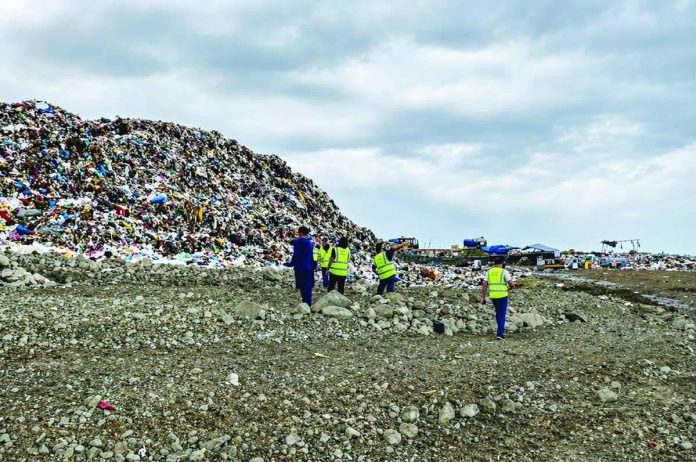
ILOILO City – This city is moving toward a major transformation in waste management with the construction of an Integrated Solid Waste Management Facility (ISWMF) that will convert biodegradable garbage into electricity, a project that city officials say will finally address the persistent problem of foul-smelling waste while helping secure the city’s future water supply.
The facility, now under development in Barangay Ingore, La Paz district and expected to become operational next year, will process biodegradable waste through anaerobic digestion — a technology that converts organic waste into methane gas for power generation instead of allowing garbage to rot in open dumps and emit foul odors and greenhouse gases.
“The problem with biodegradable waste is that once it is left to decompose in open areas, it produces foul odor and greenhouse gases. Through anaerobic digestion, the waste will be processed properly inside the facility, where it will generate methane gas that can be converted into electricity,” explained General Services Office (GSO) head Engineer Neil Ravena.
Ravena said the project represents a major shift in the city’s approach to solid waste management by transforming waste into a valuable resource instead of merely disposing of it.
“In terms of sustainability, this is the solution we have been looking for. Instead of becoming a storage area for waste, the facility will process biodegradable materials, allowing them to decompose in a controlled environment. The methane gas produced will then be converted into energy. This is Iloilo City’s sustainable solution to solid waste management,” Ravena said.
The ISWMF is designed to process up to 400 tons of municipal solid waste daily while generating approximately 3.5 megawatts of electricity.
According to Ravena, the electricity generated by the facility will power a desalination plant that will be built beside the site, enabling it to produce around 65.5 million liters of potable water per day from seawater.
“With one project, we are addressing two major concerns of the city — solid waste management and water security. The waste generated by the city will not only be managed properly but will also become a source of renewable energy that will support the production of fresh water,” he added.
Ravena also assured that the project will not displace waste pickers who currently depend on recyclable materials for their livelihood.
Around 70 waste pickers are expected to be employed in the facility’s materials recovery and sorting area, where recyclable materials will be segregated before being sold to accredited junk shops, while residual waste will undergo further processing.
City officials said the Integrated Solid Waste Management Facility forms part of Iloilo City’s long-term environmental strategy aimed at reducing dependence on landfills, minimizing greenhouse gas emissions, and maximizing the recovery of resources through renewable energy technology./PN