


THE TRUE value of an emergency drill is not measured by how smoothly it unfolds. Its value lies in the mistakes it uncovers.
That is perhaps the most important lesson behind the just-concluded Inter-Agency Territorial Defense Operations Exercise (Pag-ugyon 2026) in the towns of Miag-ao and San Joaquin in Iloilo Province. While the exercise simulated territorial defense-related emergencies and civilian spillover scenarios, its broader significance extends far beyond military preparedness.
At its core, the exercise tested government before a real crisis tests it.
Too often, weaknesses in government systems are discovered only when lives are already at risk. A typhoon strikes. An earthquake occurs. A major fire erupts. A large-scale evacuation becomes necessary. Suddenly, communication lines become overwhelmed, agencies struggle to coordinate, resources arrive late, and confusion spreads among responders and the public alike.
By then, the consequences are no longer theoretical.
Exercises like Pag-ugyon 2026 allow government agencies to discover those weaknesses while the stakes remain low. No lives are in immediate danger. No communities are actually displaced. No families are waiting desperately for rescue. Mistakes made during an exercise become lessons. The same mistakes made during a real emergency can become tragedies.
This is why simulations matter.
The scenarios conducted are opportunities to answer difficult but necessary questions.
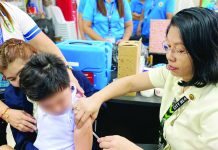
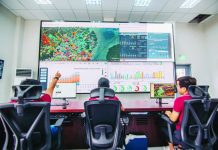
Can agencies communicate quickly and effectively with one another? Can emergency operations centers process information and make decisions in real time? Can evacuation procedures be carried out efficiently? Can medical teams, rescue units, local governments, police officers, and military personnel work seamlessly together?
More importantly, what happens when something goes wrong?
Every emergency plan looks impressive on paper. Organizational charts are neatly arranged. Responsibilities are clearly defined. Procedures appear logical and efficient. But reality has a way of exposing flaws that documents cannot predict.
A blocked road can delay relief operations. A communication breakdown can prevent critical information from reaching responders. Confusion over authority can slow decision-making. Shortages of equipment or personnel can cripple an otherwise well-designed response.
These vulnerabilities often remain hidden until they are tested.
Iloilo has earned a reputation for proactive disaster risk reduction and management. Over the years, local governments, emergency responders, and disaster management offices have demonstrated commendable preparedness in dealing with typhoons, floods, and other emergencies. The province has become a model for resilience in Western Visayas.
But preparedness is a continuous process. As communities grow, infrastructure expands, and threats evolve, emergency plans must also evolve. What worked during a disaster five years ago may no longer be sufficient today. New challenges require new solutions. The only way to know whether systems remain effective is to test them regularly.
That is why Pag-ugyon 2026 deserves recognition. Rather than waiting for a crisis to reveal shortcomings, Iloilo has chosen to confront those shortcomings proactively. The exercise provided an opportunity to identify gaps in communication, logistics, evacuation procedures, command structures, and inter-agency coordination before they are exposed by a real emergency. After all, the purpose of a drill is not to prove that government is perfect. It is to reveal where government can improve.
In emergency management, success is often measured by what does not happen: the panic that is prevented, the confusion that is avoided, the lives that are saved, and the suffering that is reduced.
The real test will come someday. No one knows when or in what form. What matters is whether government chooses to prepare for it.
Through Pag-ugyon 2026, Iloilo has taken an important step in that direction.