



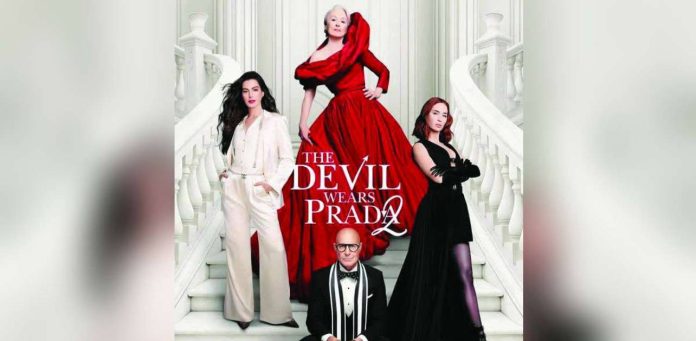
IN AN ERA where sequels are almost expected to flop, or worse, diminish the legacy of what was once celebrated, “The Devil Wears Prada 2” arrives in a different attire: confident, self-aware, and genuinely worth the revisit, especially for the loyal fans of the first film.
Set nearly two decades later, the sequel revisits Runway magazine amid an evolving media landscape. Miranda Priestly (Meryl Streep) now struggles with the decline of traditional publishing and finds her path once again intertwined with Andy Sachs, who has now made a name for herself as a respected journalist.
In the second installment, we still have the beloved characters hunkering down to work in the fantasy-like world of fashion. Miranda remains complicated, still the sharp and intimidating queen of her little kingdom. But now her kingdom is becoming too small for comfort, as Runway grapples with the digitalization of the publishing world.
The film resists the urge to soften Miranda to make her more acceptable to viewers in today’s time. Streep makes a commendable effort to keep the character feeling morally complex in a way that feels honest, not rewritten.
The same goes for the rest of the characters, there’s a clear respect for their original essence, allowing longtime fans to reconnect with them rather than meet altered versions.
Watching the sequel feels like falling in love all over again, not just with the characters, but with the world they created. There’s an ease to the humor. The film doesn’t try too hard to be funny, and that’s exactly why it lands.
And then there’s the fashion, extravagant, yes, but never cringey. It understands that fashion, at its core, is done with purpose. But beneath the glam, there’s something more personal, especially for those behind the publishing business.
The film captures what it feels like to sit in the front row of an industry constantly changing: the decline of print, the reality of layoffs, the sense of irrelevance in the face of shifting audiences.
The film also touches on other faces of fashion beyond editorial, particularly the retail side, reminding audiences that the industry is more layered and more fragile than it appears on the runway.
“The Devil Wears Prada 2” is a necessary sequel because it mirrors how fashion and journalism endure, and beauty and print don’t go out of style even when the industry shifts. As long as there are stories that need telling, the purpose stays and doesn’t lose its value.
The changes in the traditional workplace are also reflected in the film. The once-normalized toxicity of demanding bosses is no longer left unchecked. Assistants now have something to say.
While the first film remains iconic — it set the benchmark, after all — the sequel doesn’t try to outshine it. Instead, the first is treated with much care and caution. The cast knew what they were signing up for. The intention is clear; more importantly, their love for what they do reflects it.
“The Devil Wears Prada 2” also reminds us that it’s okay to want acknowledgement, to be seen for the work you put in. In the end, the characters feel validated after their efforts are noticed by the people they work alongside.
In an industry that constantly demands more, where newsrooms get smaller, and people look for acceptance, “The Devil Wears Prada 2” reaffirms that in fashion and journalism, people are seen because responsibility to the job and obligation to the truth can survive whatever challenging times. (Jessica Ann Evangelista © Philippine Daily Inquirer)