




BEYOND the restless presence of Mt. Kanlaon and the dazzling spectacle of its famed Bailes de Luces (Dance of Lights), the town of La Castellana, Negros Occidental holds another story worth celebrating—one woven from artistry, innovation, and environmental resourcefulness.
It is called the “Traje de Saging.”
Unfamiliar as it may sound, this unique creation has become a symbol of La Castellana’s identity as the “Banana Capital” of Negros Occidental.
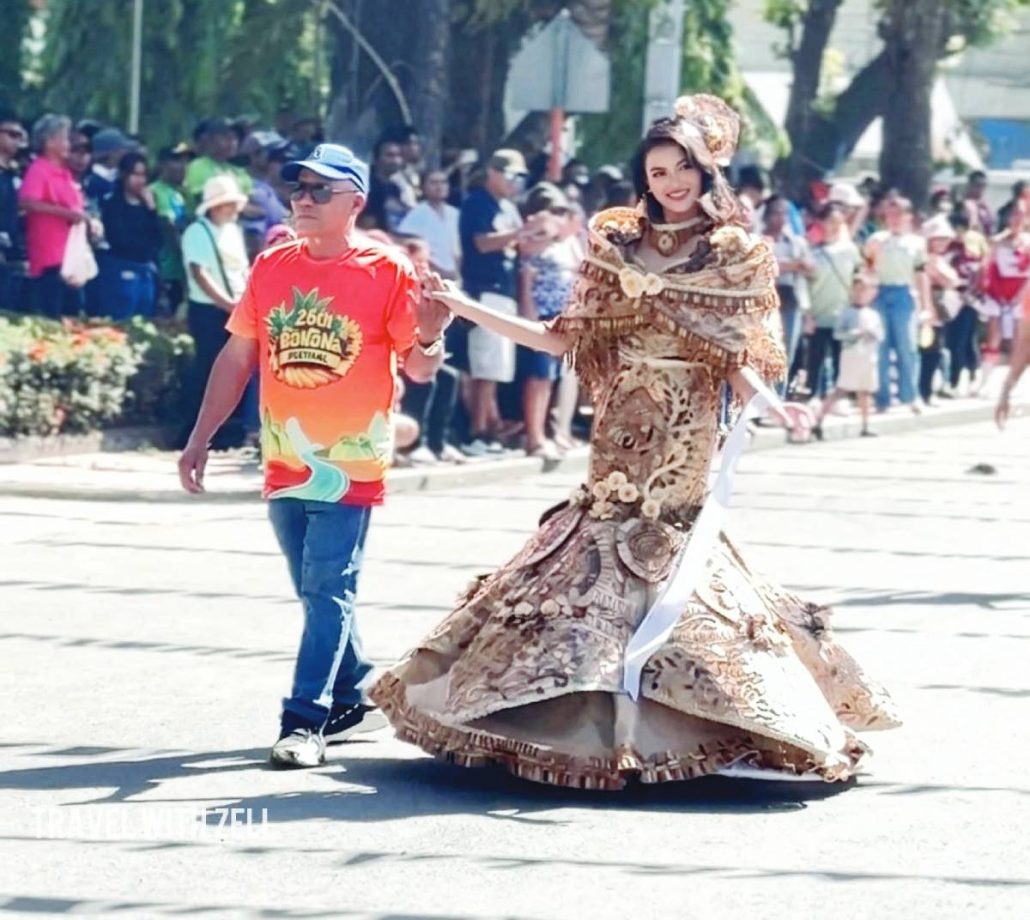

Traditionally, the word traje refers to Spanish-inspired attire, particularly for women, a legacy of the colonial era that has evolved across the Philippines. Among its most iconic forms is the Traje de Mestiza, or Maria Clara gown, known for its elegant silhouette and signature butterfly sleeves.
In nearby Silay City, often dubbed the “Little Paris of Negros,” this influence is reflected in the Traje de Silay, distinguished by its intricate trims and use of patadyong-inspired fabric.
La Castellana, however, has taken a different path—one rooted in its agricultural abundance.
Local artisans have transformed banana by-products into wearable art, using upas (dried pseudostem) and ramay (dried banana leaves) as primary materials. The result is the Traje de Saging—a striking fusion of tradition, creativity, and sustainability.
This year, the gowns took center stage as the official attire of the 13 candidates in the Banana Queen pageant held on April 6, further elevating their prominence in the town’s annual Banana Festival.
Even before the rise of the Traje de Saging, local designers had already been experimenting with banana-based materials for festival costumes. But as the celebration evolved over more than two decades, so too did the craftsmanship—culminating in refined, elegant creations that now rival conventional textiles in both beauty and design.
What may initially sound unusual has, in truth, become a compelling expression of ingenuity.
At its core, the Traje de Saging reflects the town’s deep connection to its environment. It highlights the abundance of banana crops across La Castellana’s 13 barangays while promoting sustainability through the creative use of agricultural by-products.
It also tells a story of resilience.
Situated near the active Kanlaon Volcano, the town’s agricultural sector constantly faces natural threats. Yet through innovation, local artisans have turned vulnerability into opportunity, crafting fashion pieces that embody both endurance and adaptability.
More than just garments, these creations represent a growing cultural movement—an “art of necessity” shaped by local hands and imagination.
Former mayor and now Vice Mayor Alme Rhummyla Nicor-Mangilimutan, one of the minds behind the initiative, described the creations as a reflection of “superb artistry” grounded in nature.
Through the Traje de Saging, the Banana Festival has evolved into more than a celebration of agriculture—it has become a platform where farming, culture, and artistry converge.
Today, these garments are increasingly recognized as a form of indigenous art—an emerging cultural treasure that adds depth to La Castellana’s heritage.
In a rapidly modernizing world, the Traje de Saging stands as proof that tradition can evolve without losing its essence.
It is not merely fashion.
It is a story—of identity, sustainability, and pride—woven from the very fibers of the land.
And in every stitch, La Castellana tells the world who it is./PN