



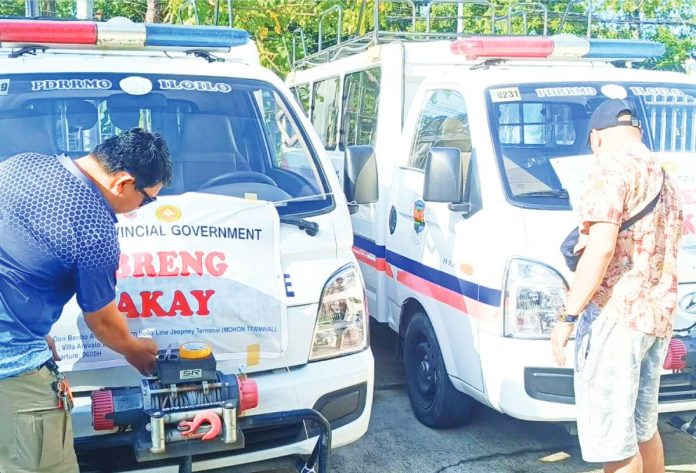
ILOILO City – A citywide transport holiday today is feared to adversely affect public mobility here, forcing the suspension of face-to-face classes and prompting the local government to roll out emergency “Libre Sakay” operations as more than 1,700 jeepneys stop plying their routes in protest of soaring fuel prices and delayed fare adjustments.
The Western Visayas Alliance of Transport Cooperatives and Corporations, Inc. (WVATCCI) confirmed that at least 1,782 modern and traditional jeepney units will join the one-day strike, warning of a looming collapse of the transport sector if government intervention remains stalled.
“This decision is not a matter of choice but an unavoidable measure taken to prevent the total financial collapse of our industry, the public utility jeepneys,” said WVATCCI president Sherry Rose Songano.
City Hall moved swiftly to cushion the disruption, announcing the suspension of in-person classes across all levels and activating contingency measures to assist thousands of stranded commuters.
“Nanawag sa aton ang transport alliance kag nagpahibalo nga may transport holiday sa Lunes. Para mabuligan ang aton commuters, ang Iloilo City Government magapatuman sang Libre Sakay,” said Mayor Raisa Treñas.
At least six government buses and service vehicles will be deployed from major hubs — Arevalo Plaza, Mandurriao Plaza, and Jaro Plaza — serving routes to and from Plaza Libertad in a loop system designed to maximize passenger turnover.
“Ang aton mga salakyan magahulat sa designated areas 6 a.m. kag magabiyahe ini once fully loaded, pakadto sa ila respective routes kag mabalik dayon para mas madamo pa gid nga pasahero ang maserbisyuhan,” Treñas said.
Operations will run from 6 a.m. to 10 a.m. and resume from 4 p.m. to 8 p.m., targeting peak commuting hours.
“Ginahimo naton ini para masiguro nga bisan may transport holiday, may masakyan gihapon ang aton pumuluyo,” the mayor added.
Authorities also urged carpooling and public cooperation to ease congestion.
“Gina-engganyo man naton ang may mga pribado nga salakyan nga mag-carpooling agud makabulig sa iban nga naga-commute,” Treñas said, adding, “Nagapanawagan kita sa tanan nga magkooperar kag magplano sang ila byahe samtang ginahimo naton ang tanan nga tikang agud maserbisyuhan ang kadam-an.”
Transport leaders, however, stressed that the strike underscores a deeper crisis driven by relentless fuel price hikes, with diesel prices now exceeding P110 per liter.
“If left unaddressed, this situation will inevitably result in the total collapse of our operations, an outcome that will adversely affect not only the riding public but also the thousands of employees and families whose livelihoods depend on the transport industry,” Songano said.
WVATCCI vice president Halley Alcarde detailed the financial strain, noting that modern jeepneys consume 38 to 45 liters of fuel daily, costing up to P4,500, on top of wages ranging from P1,200 to P1,300 per day.
“Kung makakita tayo ng P6,500 per day or P6,000 wala nang matitira sa kinikita,” Alcarde said.
The group is demanding the immediate implementation of previously approved fare increases — P1 for traditional jeepneys and P2 for modern units — as well as a comprehensive review of fare structures and fuel subsidies.
“We are temporarily pausing our operations to save our industry so that we may continue serving the community in the long term,” Songano added.
WVATCCI spokesperson Perfecto Yap said operators have already taken cost-cutting measures, including reducing trips and ensuring full passenger loads before departure, but these are no longer enough.
“Indi na gid makaya and we need the intervention sang aton nga national government agencies,” Yap said.
Despite assurances from both sides, Monday’s transport holiday is expected to leave thousands scrambling for alternative rides, exposing the fragile balance between commuter needs and the survival of the transport sector./PN