


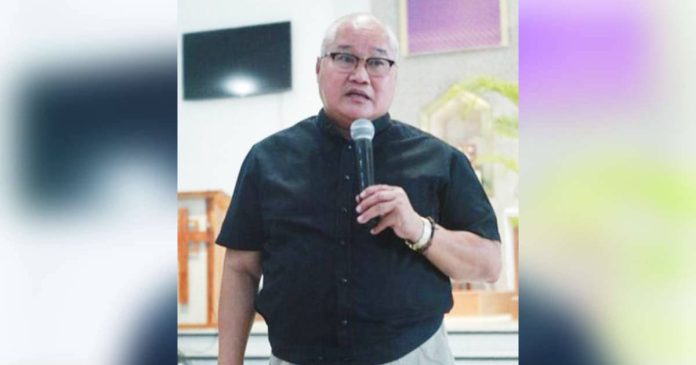
ILOILO City – Monsignor Meliton Oso, director of the Jaro Archdiocesan Social Action Center (JASAC), has issued a rallying call for Ilonggos to join the nationwide “Trillion Peso March” on September 21, a coordinated mass action meant to denounce the plunder of public funds and the entrenched culture of corruption in government.
“This is a wake-up call for the Filipino people,” Oso said on Sunday. “The people must show courage, strength, and determination against corruption and the theft of our nation’s coffers.”
He said he is meeting with various groups to finalize Iloilo’s counterpart event of the march.
The protest, timed with the anniversary of the 1972 Martial Law declaration by dictator Ferdinand Marcos Sr., will take center stage at the People Power Monument in Quezon City, with simultaneous gatherings in provinces across the country.
Oso lauded the Catholic Bishops’ Conference of the Philippines (CBCP) for releasing a strong pastoral letter on flood control corruption, describing it as “an official and powerful statement of the Church” that reinforces the moral urgency of the protest.
The CBCP letter posed a stinging question: “How credible are these inquiries when the very institutions conducting them are themselves implicated?”
Archbishop Midyphil Billones of Jaro echoed the bishops’ call, warning against the dangerous normalization of corruption.
“Normalizing corruption has already flooded and ravaged our nation,” he wrote in his own pastoral letter. “Yet even in this flooding, the Lord is with us; he will help us ride the waves and rise from the tumultuous waters through righteousness, honesty, and accountability.”
The CBCP’s nationwide pastoral statement urged Filipinos to reject patronage politics, demand integrity from leaders, and unite in pressing for an independent probe into anomalous flood-control projects.
It concluded with a forceful call: “Let us rise above the floods of corruption together. Let justice roll down like waters across our land. Let us rebuild our nation on truth, justice, and the common good.”
Oso, meanwhile, voiced frustration at the ongoing congressional inquiries, saying they unfairly single out contractors while sparing politicians who pocket the bulk of public works funds.
Citing Sen. Panfilo Lacson’s revelation that politicians often take the lion’s share, Oso said accountability must extend beyond the private sector.
“Restitution is not about donating stolen money to charities,” Oso emphasized. “True restitution is returning what was taken in the proper way — because that money comes from the sweat of workers and the taxes of Filipinos.”
As the September 21 mobilization draws near, Oso underscored that the march is not merely a protest but a moral outcry — a people’s demand for justice, accountability, and an end to the systemic corruption that has drained the nation’s lifeblood for decades.
Meanwhile, cause-oriented group Bagong Alyansang Makabayan (BAYAN)-Panay reminded the Iloilo City Police Office that the so-called “no permit, no rally” policy cannot be used to curtail the people’s fundamental right to protest.
“Our rights are not privileges granted by permits but are guaranteed by the 1987 Constitution itself,” it stressed in a statement.
BAYAN-Panay secretary-general Elmer Forro cited Article III, Section 4 of the Bill of Rights stating: “No law shall be passed abridging the freedom of speech, of expression, or of the press, or the right of the people peaceably to assemble and petition the Government for redress of grievances.”
“Time and again, this (no permit, no rally) policy has been wielded to suppress workers, farmers, urban poor, youth, and other marginalized sectors demanding accountability — while the wealthy and powerful freely gather and conduct their business without harassment. This reveals the double standard of authorities — lenient to the influential, repressive to the poor and marginalized, said Forro.
To demand transparency and accountability in government projects, including flood control measures riddled with corruption and neglect, is not only a right but a duty of the people, he stressed.
“Protest is the voice of the poor against a system that prioritizes profit over people’s welfare,” Forro added.
BAYAN-Panay called on the Iloilo City Police Office and all state forces to respect the Constitution they swore to uphold, “and to stand on the side of the people’s rights and welfare — not with the elite few who benefit from corruption and plunder.”/PN

