

ILOILO — The Department of Science and Technology in Western Visayas (DOST) and the Tubungan local government have intensified efforts to shield farmers from the worsening effects of climate change through a climate-resilient farming initiative aimed at boosting agricultural productivity and food security.
The two institutions recently conducted a benchmarking activity focused on the Climate Field School (CFS) Program, a science-based initiative designed to equip farmers with practical tools, climate information, and adaptive farming techniques to cope with increasingly unpredictable weather conditions.
“This initiative seeks to empower local farmers with the knowledge and tools necessary to adapt to the challenges posed by climate change,” DOST Region 6 said.
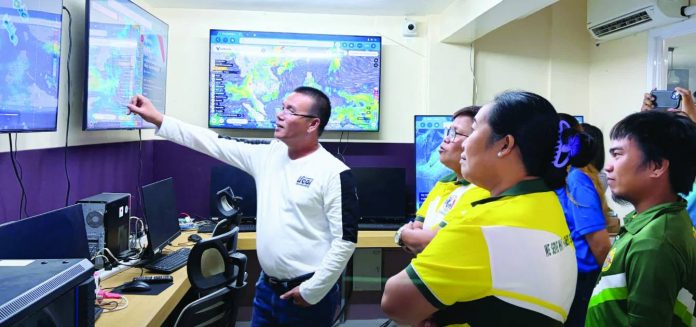
The activity provided participants with firsthand exposure to successful implementations of the CFS Program in Iloilo Province, particularly in the municipality of Dumangas, one of the province’s top rice-producing areas.
Ricky Dador, Weather Observer II of the Dumangas local government, shared the municipality’s experiences and best practices in implementing the program.
His presentation highlighted the dissemination of localized climate information, adoption of innovative agricultural technologies, and implementation of adaptive farming practices suited to local conditions.
By highlighting these initiatives, Dador showcased how informed decision-making can significantly reduce climate-related risks and improve agricultural output.
Participants also discussed the use of Smarter Approaches to Reinvigorate Agriculture as an Industry in the Philippines (SARAI) technologies, which allow farmers to make data-driven decisions based on real-time climate and field conditions.
DOST-6 said SARAI technologies are cost-effective and accessible tools that can help communities strengthen food security and build more resilient farming systems.
The collaboration between DOST Western Visayas and the Tubungan LGU proved to be pivotal, enriching the discourse surrounding the Climate Field School initiative.
Dumangas has adopted the CFS Program as part of its broader commitment to climate-smart agriculture aimed at improving productivity while enhancing farmers’ capacity to withstand climate-related threats.
The benchmarking activity also aligned with DOST-6’s Smart and Sustainable Communities Program, which promotes the integration of science and technology in local agricultural development.
“The exchange of innovative ideas and strategies underscored the significance of collaboration in developing effective climate-resilient and sustainable agricultural practices,” DOST-6 added./PN