




BY THE time most of Iloilo City is just beginning to stir, rows of neatly folded school uniforms already line the sidewalks of the downtown district.
White blouses, pleated skirts, trousers, socks, and school patches hang from makeshift displays, waiting for parents making last-minute preparations for the resumption of classes.
To many passersby, these are simply goods for sale.
But for the vendors behind the stalls, every uniform tells a story — one of sacrifice, perseverance, and dreams fulfilled through decades of hard work.
For 63-year-old Gene Sanchez of Barangay Bo. Obrero, La Paz district, selling school uniforms has been the means by which she and her husband, a pedicab driver, raised and educated their children.
For more than three decades, Sanchez has occupied a familiar place among downtown Iloilo’s sidewalk vendors. Through countless school openings and changing generations of students, she has watched her modest business help transform her family’s future.
“Amo gid ni siya ang nakabulig sa amon pangabuhi. Nakatapos akon mga kabataan sa college, ang akon agot graduate sa Business Administration sa CPU (Central Philippine University) and isa ko college level, tourism sa CPU,” Sanchez proudly shared.
Her story mirrors those of many informal vendors whose small enterprises have quietly financed educational dreams. While the profits were never enormous, they were enough to cover school fees, transportation costs, daily allowances, and other necessities from elementary school through college.
Yet the business that once sustained families is facing unprecedented challenges.
Sanchez recalls a time when customers crowded the sidewalks weeks before classes began. Today, she watches fewer buyers stop at her stall.
“Tama gid ka layo. Sang una amo ni oras indi na kami maka-arapal sang customers. Subong may nagabakal man pero indi tama kadamo, pigado gid,” she said.
The contrast is stark.
During the reopening of face-to-face classes in 2022 following the COVID-19 pandemic, sales surged as families rushed to purchase uniforms after two years of disrupted schooling. Sanchez remembers earning as much as P50,000 a day during that period.
Today, despite the approaching opening of classes, daily sales have fallen dramatically.
“Kahapon nakabenta guro kami mga P15,000 pero sang una nagabenta kami dalagku, ang pinakanubo namon sang una ara sa P50,000. Amo na kabakal sang una basta abri klasi, like sang year 2022, amo gid to pag-reopen sang klasi nga wala na sang pandemic. Nag-back to school kay duha ka tuig may pandemic. Pagbalik sang klasi nga face-to-face didto na kami nakabaligya sang daku,” she explained.
The decline reflects broader economic realities.
Competition from online sellers, increasing transportation costs, higher labor expenses, rising fabric prices, and growing logistical costs have all combined to squeeze profits and reduce customer traffic.
For 48-year-old Jonathan Adrias of Barangay Bakhaw, Mandurriao district, the struggle has become more personal.

A father of four, Adrias borrowed capital in hopes of earning enough during the back-to-school season. Instead, he now worries about how he will repay what he borrowed.
“Amo gid ni ang amon palangabuhian. Biskan gamay lang ang ginansya, kabulig-bulig man ah. Apat daan ang akon mga bata,” Adrias said.
Like Sanchez, he has witnessed the dramatic decline in sales.
“Subong pigado gid ya. May baklanay man tuod pero indi gid pareho sang una. Biskan sang nagligad nga tuig, layo katama,” he added.
Last year, Adrias typically earned between P15,000 and P20,000 daily during the school-opening season. This year, sales have struggled to reach even P10,000.
“Subong bisan may klasi, waay gid. Waay gani nakalab-ot sa P10,000 ang amon benta,” he lamented.
For younger vendors such as 30-year-old Joan Jano, the challenge is equally evident.
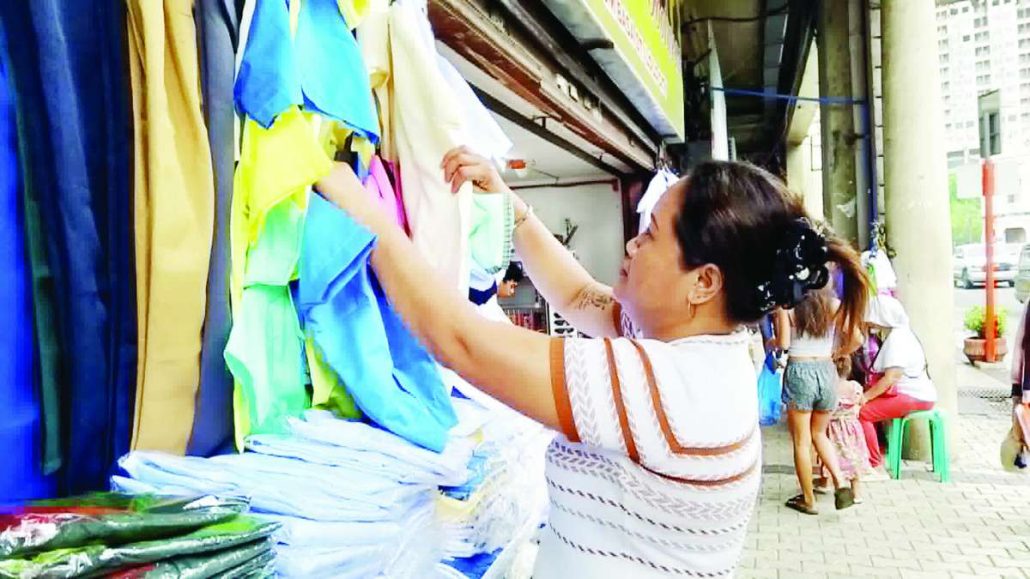
“Indi pa gawa masyado ang baklanay, pigado pa. Nagabakal lang sila gamay-gamay,” she said.
Jano believes changing consumer habits may be affecting downtown vendors. Many families now buy uniforms closer to home rather than spending money on transportation to Iloilo City.
The same concerns are echoed by 25-year-old Judy Enso, who helps manage a uniform stall in the downtown area.

“Pigado gid, indi mabakal. Mas nami sang una, wala ka kompetensya nga store kag wala sang online. Subong damo naga-order, siguro iban nagakadto sa probinsya unlike sang una nga diri gid sila sang nagabakal,” Enso observed.
Despite the challenges, hope remains a constant presence along the sidewalks.
The vendors continue arranging their merchandise every morning, greeting customers with smiles, and waiting for the rush they hope will still come before classes begin.
For them, school uniforms are not merely products.
They represent opportunity.
Every blouse sold, every pair of trousers purchased, and every uniform fitted for a student carries the possibility of another child staying in school, another family making ends meet, and another dream moving one step closer to reality./PN