



ILOILO — A widening gap in access to safe drinking water has emerged in Iloilo province, with only 11 out of 43 local government units (LGUs) meeting the national standard for “safely managed drinking water services,” exposing thousands of households to potential health risks and underscoring deep funding constraints.
Data from the Provincial Government Environment and Natural Resources Office (PGENRO) show that just 11 LGUs have reached the Department of Health’s (DOH) 62-percent target for households accessing safe water — leaving the majority of towns and cities struggling to comply with basic safety benchmarks.
The LGUs that met the standard are Zarraga, Santa Barbara, San Enrique, Pavia, Passi City, Maasin, Leganes, Lambunao, Carles, Batad, and Barotac Nuevo.
Under the definition of the United Nations Children’s Fund (UNICEF) and the World Health Organization (WHO), safely managed drinking water must be accessible within household premises, available for at least 12 hours daily, and free from fecal and chemical contamination.
Despite efforts from local governments, PGENRO said financial limitations continue to hamper compliance — particularly in conducting regular water quality testing, a key requirement to determine safety levels.
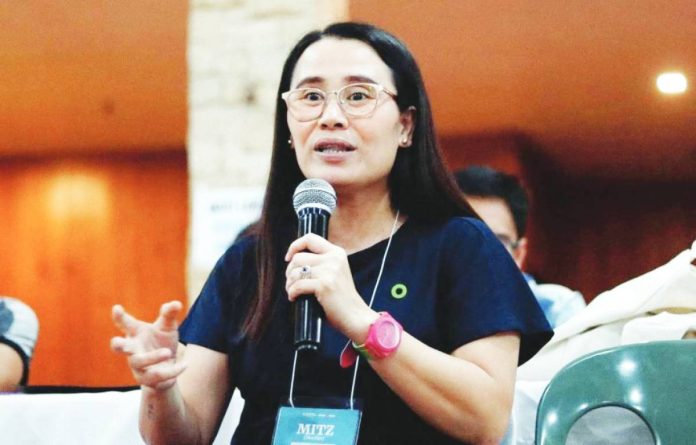
“Need gid abi ang regular testing sang ila water sources. Iban nga banwa kulang kag wala sang budget for the testing of fecal and related contaminations,” said Supervising Environmental Management Specialist Mitzi Peñaflorida in an interview with Panay News.
While some LGUs conduct fecal testing through their Municipal Health Offices (MHOs) with support from the Iloilo Provincial Health Office, these are not done regularly or monthly as required by the DOH due to budget shortages.
Peñaflorida stressed that the lack of consistent monitoring directly impacts public health.
“Kon indi sia maka-meet sang safely managed drinking water services, nagataas ang risk sang water-borne diseases,” she said.
The province’s water access profile further highlights the challenge: 58.95 percent of households rely on Level I sources such as wells or springs, 12.71 percent use communal faucets or standposts (Level II), and only 28.33 percent have individual household connections (Level III).
Amid these gaps, the provincial government is pushing long-term solutions through the Iloilo Province Integrated Water Security Plan (IPIWSP), a roadmap aimed at achieving a sustainable and climate-resilient water sector by 2035.
The plan focuses on four key pillars — 24/7 water accessibility, sufficient supply, affordability, and potable water — as Iloilo grapples with recurring water security issues worsened by prolonged dry spells and the El Niño phenomenon.
“When we talk about water accessibility, we need 24/7 access for everyone. And marami pa kaming hahabulin,” Peñaflorida said.
Gov. Arthur Defensor Jr., together with the Iloilo Province Water Security Group, recently turned over the plan to development partners, including the Coca-Cola Foundation Philippines and Catholic Relief Services (CRS) Philippines, which provided technical assistance in crafting the strategy.
Still, officials admit the road ahead remains steep, as Iloilo races to close the gap between policy targets and the reality faced by many of its communities./PN